|
REVISITING THE KEY SCIENCE FOR POLICY CONVERSATIONS AT EGU26
|
|
|
|
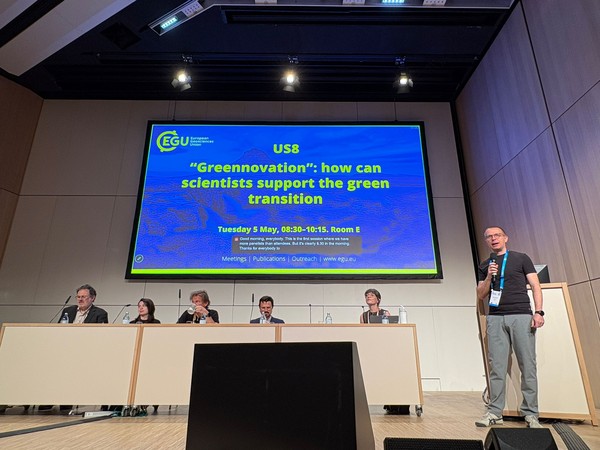
Union Symposium “Greennovation”, EGU26 |
As we left EGU26 behind with record participation, it was amazing to see increased interest in science-policy sessions from the scientific community. Thanks to all panellists who contributed to the discussions, and to all participants for igniting them! This month's GeoPolicy blog post highlights some key themes emerged from the #Sci4Pol sessions at EGU26. While each of the sessions had their own focus, the themes like innovation, policy for science, science communication and policy impact were cross-cutting. To revisit the stimulating EGU26 week, check out the blog post here. You can also watch the recordings of the union-wide sessions on the EGU26 platform, and review the session materials linked on the individual Short Course descriptions. |
|
|
REVIEW THE IPCC SPECIAL REPORT ON CLIMATE CHANGE AND CITIES
|
|
|
|
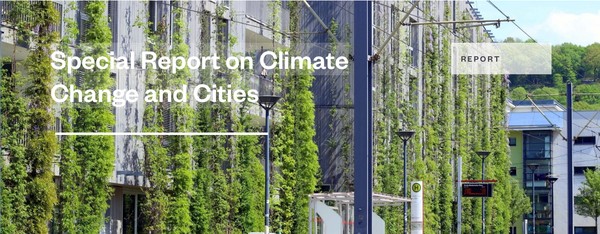
The Intergovernmental Panel on Climate Change (IPCC) is inviting government representatives and experts to review the Second-Order Draft of its Special Report on Climate Change and Cities. Building on feedback received during the First-Order Draft review, the Second-Order Draft will help shape the final report that is scheduled for publication in March 2027. This review is a great opportunity for urban and climate experts to contribute their knowledge and perspectives. The Second-Order Draft of the report includes a first draft of the Summary for Policymakers (SPM), a key product that aims to inform policymakers shaping global climate action. If you are willing to contribute with your expertise, you can find more information here and register here until 26 June! The Draft will be open for reviews until 3 July. |
|
|
APPLY FOR RESEARCH FELLOWSHIPS AT THE JOINT RESEARCH CENTRE
|
|
The Joint Research Centre, the science and knowledge service of the European Commission, has a continuous open call for expressions of interest for Research Fellow temporary positions. This call aims to create a database of candidates to provide additional capacity in the research field. Fellows contribute to research that directly informs EU policies while collaborating with experts from diverse scientific backgrounds. The range of scientific expertise sought in this call includes Marine Sciences, Geography, Environmental Sciences, Agricultural Sciences, Meteorology, Ecology, Forestry, Geology, and Hydrological Sciences, among others. To apply, you must be a citizen of one of the EU Member States or from an Associated Country and hold a PhD or have 5 years of expertise in your field. If you are eligible and interested in a potential opportunity to contribute to Europe's science-policy interface, you can read more here. |
|
|
JOIN UNESCO'S NATURAL SCIENCES EXPERT ROSTER
|
|
|
UPCOMING TALK: EVENT SERIES ON EU KNOWLEDGE VALORISATION
|
|
|
RESOURCES ON SCIENCE DIPLOMACY
|
|
Science diplomacy is gaining momentum in Europe, with the Council of the European Union recently adopting a Recommendation on the first-ever EU framework for science diplomacy. This Recommendation was built on the report "A European Framework for Science Diplomacy" by five EU Science Diplomacy Working Groups. The product of a year-long effort involving 130 science and diplomacy experts, the report provides a comprehensive introduction to science diplomacy alongside concrete policy recommendations for the EU, including the need to foster science for policy. For those who are curious to learn more about the growing field of science diplomacy, The Science Diplomat podcast is another good starting point. Hosted by an independent editorial platform, the podcast features conversations with global leaders, scientists, and policymakers on how scientific knowledge shapes international governance, as well as how institutions, advisory systems, and diplomatic processes influence how science is used. You can read the report here, and check out the podcast here! |
|
|
©2026 European Geosciences Union.
All rights reserved.
|
|
Our mailing address is:
EGU - European Geosciences Union e.V.
Kastenbauerstr. 2
81677 Munich, Germany
|
|
|
|
Banner image credit: European Union 2015 – European Parliament via Flickr
|
|
|