
Highlights at a glance
- 08:30 – Best Practices for Early Career Researcher (ECR) Engagement and Empowerment (SC1.3: Room 0.55); European Research Council (ERC) Funding Opportunities (SC1.12: Room -2.41/42); The LGBT Pride group at EGU: How to find and build your community (SC1.16: Room -2.82); AMOC changes and impacts on physical, biogeochemical, and societal systems (ITS2.5: Orals Room 2.24, onsite posters Hall X5); The atmospheric microbiome – characterization, processes, and connections with Earth’s surface (AS4.6: PICO spot 5); “Greennovation”: how can scientists support the green transition (US8: Room E1)
- 10:45 – Co-creation in Practice: Challenges, Successes, and Strategies in Water Research (SC2.4 Room -2.82); Discover data, repositories and learning materials - advance your research by using open ESS services (SC2.19 Room 0.55); AI on Spatio-Temporal Data: Why does it have to be so complicated? (SC2.24 Room -2.41/42); Sergey Soloviev Medal Lecture by Gerassimos A. Papadopoulos (MAL31-NH Room N2); Angela Croome Award Lecture by Joshua Howgego (MAL9 Room 0.15); Towards a new RoadMap for Environmental Stewardship and Sustainability in Space Exploration (US4 Room E1); Comprehensive Nuclear-Test-Ban Treaty (CTBT) Monitoring and its civil and scientific applications (SM8.2 PICO spot 1b)
- 12:45 – Psychological tools to preserve mental health while navigating the challenges of a research career (SC1.9 Room -2.41/42); Arthur Holmes Medal Lecture by Michael Paul Searle (MAL3 Room E1)
- 14:00 – Managing Academia and Parenting in society today (SC1.15 Room -2.82); Science Diplomacy: What is it and how to engage (SC3.4 Room -2.41/42); Reproducible by design: how to make sure anyone can re-run your study, even without your computer (SC3.5 Room 0.55); The future of scientific publishing – do we need scientific journals? (GDB7 Room E1); Henry Darcy Medal Lecture by Sally E. Thompson (MAL20-HS Room C); Applications of Earth system digital twins (ESSI1.8 Room D2); Geoscience problems related to radioactive contamination originated from nuclear power plants and other human activities: Chernobyl, Fukushima, and Zaporizhzhia (GI2.5 Room -2.92)
- 16:15 – Communicating Your Science: Blogs, Press Releases, and Media Interviews (SC3.8 Room 0.55); Meet the Editors: How to peer-review – Fundamentals & EGU’s model (SC3.12 Room -2.82); Geology 101: An introduction for non-geologists (SC4.1 Room -2.41/42); Seas of the Sun: The Cluster Story (US3 Room E1); Tropical Atlantic climate: seasonal-to-decadal variability, air-sea interactions, tropical basin interactions and extratropical teleconnections (OS1.7 Room L2)
- 19:00 – Alina Kabata-Pendias Medal Lecture by Bettina Weber (MAL13-SSS Room D1); Augustus Love Medal Lecture by Saskia Goes and GD Division Outstanding ECS Award Lecture by Siavash Ghelichkhan (MAL14-GD Room G2); Beno Gutenberg Medal Lecture by Satoshi Ide and SM Division Outstanding ECS Award Lecture by Kurama Okubo (MAL15-SM Room M2); Christiaan Huygens Medal Lecture by Vijay Prasad Dimri and GI Division Outstanding ECS Award Lecture by Andrea Barone (MAL16-GI Room N1); David Bates Medal Lecture by Patrick Irwin and PS Division Outstanding ECS Award Lecture by Hamish C.F.C. Hay (MAL17-PS Room E2); Hans Oeschger Medal Lecture by Friederike E.L. Otto (MAL19-CL Room B); Julia and Johannes Weertman Medal Lecture by Olaf Eisen and Arne Richter Award for Outstanding ECS Lecture by Kaitlin Naughten (MAL23-CR Room F1); Vilhelm Bjerknes Medal Lecture by Jonathan Williams and AS Division Outstanding ECS Award Lecture by Eva Pfannerstill (MAL33-AS Room G1)
Towards a new RoadMap for Environmental Stewardship and Sustainability in Space Exploration
Space exploration encompasses a broad range of activities, and is currently characterized by a new wave of Lunar missions, an expanding role of private players, and the participation of an increasing number of countries and space agencies. While this 'New Space' context offers an increasing number of opportunities for geosciences and space-related sciences at large, it also comes with increasing threats on the environments of Earth and the Moon, and with strong requirements on a durable and sustainable perspective to space exploration. This has implications for also preserving the resources and unique scientific and cultural values of celestial bodies. This Union Symposia invites attendees to discuss what the establishment of a 'Virtuous Circle of Solar System Exploration' could look like, connecting science, exploration and environmental stewardship to build a sustainable future for space exploration.
US4: 10:45–12:15 (CEST) Room E1
Medal and Award lectures
- Sergey Soloviev Medal Lecture by Gerassimos A. Papadopoulos (MAL31-NH: 10:55–11:25 (CEST) Room N2)
- Angela Croome Award Lecture by Joshua Howgego (MAL9: 11:55–12:25 (CEST) Room 0.15)
- Arthur Holmes Medal Lecture by Michael Paul Searle (MAL3: 12:45–13:45 (CEST) Room E1)
- Henry Darcy Medal Lecture by Sally E. Thompson (MAL20-HS: 14:05–14:35 (CEST) Room C)
- Alina Kabata-Pendias Medal Lecture by Bettina Weber
- Including Alina Kabata-Pendias Medal Lecture (MAL13-SSS: 19:00–20:00 (CEST) Room D1)
- Augustus Love Medal Lecture by Saskia Goes and GD Division Outstanding ECS Award Lecture by Siavash Ghelichkhan (MAL14-GD: 19:00–20:00 (CEST) Room G2)
- Beno Gutenberg Medal Lecture by Satoshi Ide and SM Division Outstanding ECS Award Lecture by Kurama Okubo (MAL15-SM: 19:00–19:55 (CEST) Room M2)
- Christiaan Huygens Medal Lecture by Vijay Prasad Dimri and GI Division Outstanding ECS Award Lecture by Andrea Barone (MAL16-GI: 19:00–19:50 (CEST) Room N1)
- David Bates Medal Lecture by Patrick Irwin and PS Division Outstanding ECS Award Lecture by Hamish C.F.C. Hay (MAL17-PS: 19:00–19:55 (CEST) Room E2)
- Hans Oeschger Medal Lecture by Friederike E.L. Otto (MAL19-CL: 19:00–20:00 (CEST) Room B)
- Julia and Johannes Weertman Medal Lecture by Olaf Eisen and Arne Richter Award for Outstanding ECS Lecture by Kaitlin Naughten (MAL23-CR: 19:00–20:00 (CEST) Room F1)
- Vilhelm Bjerknes Medal Lecture by Jonathan Williams and AS Division Outstanding ECS Award Lecture by Eva Pfannerstill (MAL33-AS: 19:00–19:55 (CEST) Room G1)
Short courses
- Best Practices for Early Career Researcher (ECR) Engagement and Empowerment (SC1.3: 08:30–10:15 (CEST) Room 0.55)
- European Research Council (ERC) Funding Opportunities (SC1.12: 08:30–10:15 (CEST) Room -2.41/42)
- The LGBT Pride group at EGU: How to find and build your community (SC1.16: 08:30–10:15 (CEST) Room -2.82)
- Co-creation in Practice: Challenges, Successes, and Strategies in Water Research (SC2.4: 10:45–12:30 (CEST) Room -2.82)
- Discover data, repositories and learning materials - advance your research by using open ESS services (SC2.19: 10:45–12:30 (CEST) Room 0.55)
- AI on Spatio-Temporal Data: Why does it have to be so complicated? (SC2.24: 10:45–12:30 (CEST) Room -2.41/42)
- Psychological tools to preserve mental health while navigating the challenges of a research career (SC1.9: 12:45–13:45 (CEST) Room -2.41/42)
- Managing Academia and Parenting in society today (SC1.15: 14:00–15:45 (CEST) Room -2.82)
- Science Diplomacy: What is it and how to engage (SC3.4: 14:00–15:45 (CEST) Room -2.41/42)
- Reproducible by design: how to make sure anyone can re-run your study, even without your computer. (SC3.5: 14:00–15:45 (CEST) Room 0.55)
- Communicating Your Science: Blogs, Press Releases, and Media Interviews (SC3.8: 16:15–18:00 (CEST) Room 0.55)
- Meet the Editors: How to peer-review – Fundamentals & EGU’s model (SC3.12: 16:15–18:00 (CEST) Room -2.82)
- Geology 101: An introduction for non-geologists (SC4.1: 16:15–18:00 (CEST) Room -2.41/42)
Seas of the Sun: The Cluster Story
Cluster, constellation of four spacecraft investigating the interaction between the Sun and Earth’s magnetosphere, was originally proposed to ESA in 1982, was subject to a launch failure in 1996, but was rebuilt after great effort from the community. It was eventually, successfully launched in 2000. This Union Symposia, centered around a new documentary about the mission, will discuss the story of Cluster, its science and some lessons learned. In particular it will include aspects of the making of documentary itself and the unique challenges and opportunities of telling the story of a mission that has a history spanning almost 50 years while also grappling with the creative process of communicating the esoteric nature of heliophysics/space plasma science to the broader public.
US3: 16:15–18:00 (CEST) Room E1
Applications of Earth system digital twins
Europe has embarked on an ambitious journey to build the next generation of digital replicas of our planet. The European Commission’s Destination Earth (DestinE) initiative is at the heart of this effort: a multi-year programme, implemented by ECMWF, ESA and EUMETSAT, that is developing high-precision digital twins of the Earth system to model, monitor and simulate natural phenomena, hazards and the related human activities. This session will present contributions that explore the applications of Earth system digital twins, co-designed with stakeholders, ranging from extreme event prediction to long-term climate adaptation, from urban liveability to marine and hydrological systems.
ESSI1.8: Orals: 14:00–15:45 (CEST) Room D2, Onsite posters Wed 6 May, 08:30–10:15 (CEST) Hall X4
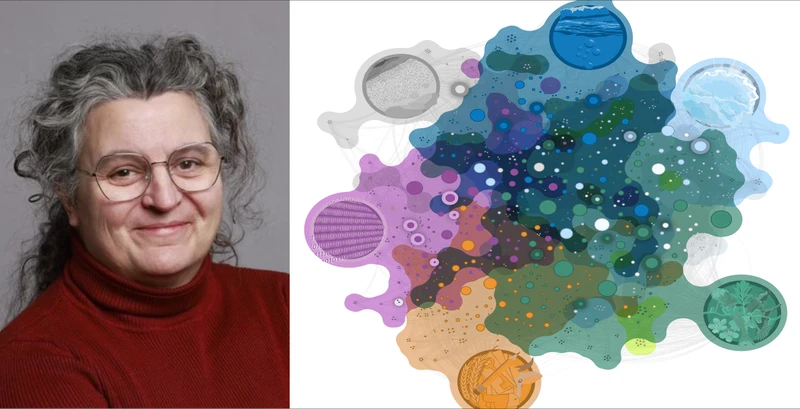
Meet our Artist in Residence – Núria Altimir
Núria Altimir (LinkedIn profile) is a data scientist, data portrait artist and biogeoscientist, with experience spanning atmosphere-biosphere exchange mechanisms, flux-based ecological and physiological measurements, and functional ecology. At the General Assembly she will be creating several large scale data-based artworks examining how networks and uncertainty in science can be represented in real time.
Head over to her booth in Foyer D and talk to her about your research and learn more about the art she will be creating this week!
Comprehensive Nuclear-Test-Ban Treaty (CTBT) Monitoring and its civil and scientific applications
The Comprehensive Nuclear-Test-Ban Treaty's International Monitoring System uses a global network of seismic, hydroacoustic, and infrasound sensors, as well as air sampling of radionuclides, to detect nuclear tests worldwide. The data from the monitoring system stations undergoes a multi-step processing and analysis procedure at the International Data Centre to detect and locate natural and human-made events in any environment - underground, underwater, or in the atmosphere. By using atmospheric transport modelling, a link between a radionuclide detection and a possible source region can be estimated. On-site inspection technologies utilize similar seismo-acoustic methods on a smaller scale, as well as geophysical methods like ground penetrating radar and geomagnetic surveying, to identify evidence of a nuclear test. This session will present studies focused on methods and applications for event detection and location using seismic, hydroacoustic, infrasound, and radionuclide technologies, and from research investigating the civil and scientific use of these data.
SM8.2: PICO: 10:45–12:30 (CEST) PICO spot 1b
Geoscience problems related to radioactive contamination originated from nuclear power plants and other human activities: Chernobyl, Fukushima, and Zaporizhzhia
Radioactive materials are pollutants that are hazardous for human society, but are also ideal markers in understanding the dynamics of physical/chemical/biological reaction chains in the environment. As a consequence of this, manufactured radioactive contamination involves factors of regional and global transport, and local reactions of radioactive materials through atmosphere, soil and water system, ocean, and organic and ecosystem, and its relations with human and non-human biota. This session will present new discoveries from several locations grappling with this challenge, whilst presenting additional insights from a multi-disciplinary mindset.
GI2.5: Orals: 14:00–15:45 (CEST) Room -2.92, on site posters: 16:15–18:00 (CEST) Hall X1
The future of scientific publishing – do we need scientific journals?
For several centuries, scientific journals have been the primary means for disseminating and validating scientific knowledge. They provide platforms for peer review, ensure long-term archiving, and often form rankings by which researchers are evaluated. However, the digital era opened new possibilities for faster and more interactive scientific publishing, though with different levels of rigor in scientific quality control, e.g., open access preprint servers, repositories and discussion forums with public peer review. At the same time, the pay-to-publish model led some commercial journal publishers to impose high article processing charges, prioritizing profit over quality, while the scientific quality assurance is performed by scientists. This great debate will interrogate the role, and future of scientific publishing, with a focus on transparency, cost efficiency and scientific integrity.
GDB7: 14:00–15:45 (CEST) Room E1
The atmospheric microbiome – characterization, processes, and connections with Earth’s surface
Microorganisms – comprising bacteria, archaea, viruses, protists, and fungi – play vital roles in nutrient cycling and maintaining ecological balance. Microbial cells from surface environments are continuously aerosolized, with the atmosphere playing a major role in their transport and redistribution across temporal and spatial scales. Studies on atmospheric microorganisms have largely focused on their abundance, diversity, and potential climatic and sanitary implications. However, the atmosphere is not merely an inert medium but instead hosts airborne living cells that both influence and are influenced by biological, chemical, and physical processes, contributing to the intricate web of life on our planet. This session provides an interdisciplinary platform for all atmospheric scientists, biogeoscientists, microbiologists, and others interested in aerial transport of living microorganisms, microbial processes in the atmosphere, and their feedbacks on the Earth’s surface systems.
AS4.6: PICO: 08:30–10:15 (CEST) PICO spot 5
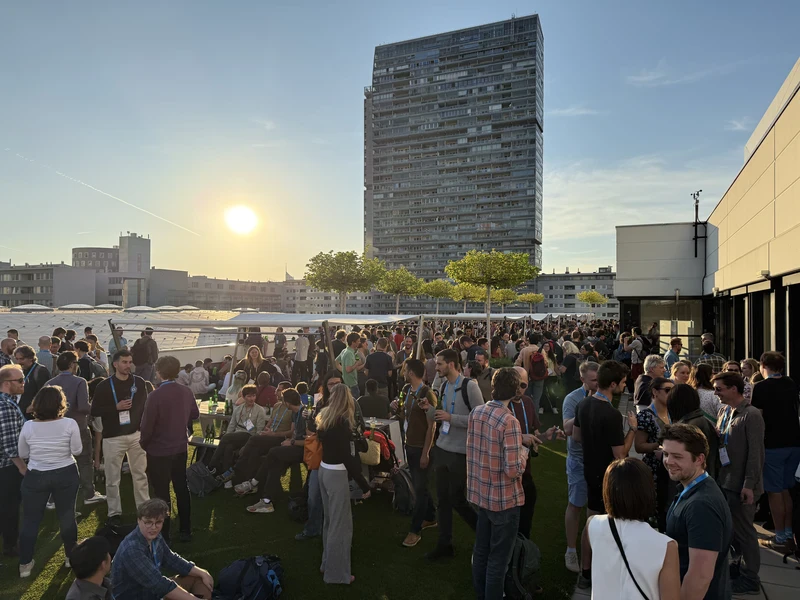
ECS Networking Reception
Looking to get to know your fellow Early Career Scientists (ECS)? Want to make a connection with your Division's ECS Representative? Don't miss the EGU26 Early Career Scientist Networking Reception (NET10, 18:00–19:30 (CEST) Rooftop Foyer and Foyer C. This very popular event fills up fast and is spread over two floors, so stop by early to grab a spot in the sunshine!
AMOC changes and impacts on physical, biogeochemical, and societal systems
The Atlantic Meridional Overturning Circulation (AMOC) plays a critical role in regulating Earth’s climate. Therefore, a potential future weakening or even collapse of the AMOC could have major climatic and societal impacts. While some of these changes and impacts have been investigated, their wide-ranging nature has led to scattered knowledge with limited intercomparisons between different lines of evidence. In this session, researchers who bridge multiple disciplines will bring together the latest knowledge on AMOC changes and their impacts.
ITS2.5: Orals: 08:30–10:15 (CEST) Room 2.24, onsite posters: 10:45–12:30 (CEST) Hall X5
Tropical Atlantic climate: seasonal-to-decadal variability, air-sea interactions, tropical basin interactions and extratropical teleconnections
The tropical Atlantic exhibits significant ocean variability from daily to decadal time scales, driven by complex ocean dynamics and air-sea interactions. The studies in this session are devoted to advancing the understanding of these dynamics and their climatic impacts on both adjacent and remote regions, including their interactions with other tropical basins. In addition, new information on the effects of climate change and variability modes on the tropical Atlantic, with a particular focus on impacts on marine ecosystems, will be presented.
OS1.7: Orals, 16:15–18:00 (CEST) Room L2, onsite posters: 10:45–12:30 (CEST) Hall X4
EGU Exhibition
Don’t miss out the EGU Exhibition where you will get a chance to talk with industry representatives and members of other academic, scientific and publishing organisations. Several of the Exhibitors are running special events throughout the week, check the Exhibition events portal for a range of events.
Today at the Open Science and Data Help Desk lunchtime sessions: The role and benefits of domain repositories for Open Science (Kirsten Elger, GFZ Helmholtz Centre for Geosciences)
12:45 – 13:45 (CEST) Booth X207
Opening times of the Exhibition:
Monday, 4 May to Thursday, 7 May 2026: daily from 10:00 to 18:00 (CEST)
Friday, 8 May 2025: 10:00–13:00 (CEST)
List of Exhibitors
“Greennovation”: how can scientists support the green transition
The European Green Deal, launched by the European Commission in 2019 to reduce emissions by at least 50% by 2030, will transform Europe’s economy, energy, transport, and industrial sectors. Moreover, building on this trajectory, the new 2040 climate target aims for a 90% reduction compared to 1990 levels. Achieving this ambitious goal requires substantial investment in innovation, clean technology, and green infrastructure, while ensuring a just transition for the communities most affected by several of these structural changes. Scientists play a critical role in driving green innovation, so their active participation in the innovation process is essential for the successful implementation of the Green Deal. This Union Symposia will explore programmes, challenges, and opportunities for scientists to engage in the innovation process, and how a just transition can be ensured for communities most affected by structural changes in the economy and energy systems.
US8: 08:30–10:15 (CEST) Room E1
Meet EGU - at the EGU Booth in Hall X2 and the 25 years of interactive publishing booth in the Entrance Hall
Talk to the volunteers who make EGU happen; from giving out awards and funding, to making decisions about our publications and the General Assembly, come and Meet EGU!
- Meet the executive editors of Geochronology (25 years of interactive open-access publishing booth ): 10:00–10:45 CEST
- Meet the Stratigraphy, Sedimentology and Palaeontology division team (EGU booth ): 10:00–11:00 CEST
- Meet the Ocean Sciences division team (EGU booth ): 10:00–11:00 CEST
- Meet the Tectonics and Structural Geology division team (EGU booth ): 11:00–12:00 CEST
- Meet the Topical Events Committee (EGU booth ): 11:00–12:00 CEST
- Meet the chief editors of Earth System Dynamics (25 years of interactive open-access publishing booth ): 11:00–11:45 CEST
- Meet the Atmospheric Sciences division team (EGU booth ): 12:00–13:00 CEST
- Meet the EGU office staff (EGU booth ): 12:30–13:15 CEST
- Meet the Geodynamics division team (EGU booth ): 12:45–13:45 CEST
- Meet the executive editors of Atmospheric Measurement Techniques (25 years of interactive open-access publishing booth ): 12:45–13:45 CEST
- Meet the Earth & Space Science Informatics division team (EGU booth ): 14:00–15:00 CEST
- Meet the co-chairs of the Programme Committee and Events Manager (EGU booth ): 15:00–15:30 CEST
- Meet the executive editors of Geoscience Communication, Solmaz Mohadjer & John Hillier (25 years of interactive open-access publishing booth ): 15:45–16:15 CEST
- Meet the Hydrological Sciences division team (EGU booth ): 15:45–16:45 CEST
About
EGUtoday helps you keep up with the many activities at the General Assembly by highlighting sessions and events from the programme. If you have comments, email the editor Hazel Gibson at communications@egu.eu. The newsletter is available at https://www.egu.eu/egutoday/ and on the EGUapp.
The Assembly Online
LinkedIn
Instagram
YouTube
Facebook
Mastodon
Bluesky
blogs.egu.eu, geolog.egu.eu
www.egu.eu