
Highlights at a glance
- 08:30 – Compound Events and Multi-Hazard Analytics (SC2.1 Room -2.82); Radiocarbon Dating Concepts and Practical Guide (SC2.3 Room -2.41/42); Processing and visualizing 2-D datasets using the PyAnalySeries software for research and teaching (SC2.27 Room 0.55); The why and how of beauty as a tool for effective science communication (SC5.1 Room -2.32); Climate change, morals, values and policies (US6 Room E1); ST Division Outstanding ECS Award Lecture by Samuel Badman (MAL50-ST Room M1); Hannes Alfvén Medal Lecture by Zdeněk Němeček and Jana Šafránková (MAL18-ST Room M1); The costs of Natural Hazards: direct, indirect, tangible and intangible aspects (NH9.2 Room E2)
- 10:45 – Grappling with geoethical values and principles: A hands-on, participatory workshop (SC1.11 Room 0.55); Invited to interview? Prepare for success with job applications and interviews in industry and academia (SC1.17 Room -2.41/42); Arne Richter Award for Outstanding ECS Lecture by Nivedita Sairam (MAL6-NH Room E2); Have we broken the Earth’s water cycle? Pathways from Planetary Boundaries to local Safe Operating Spaces (US5 Room E1); From research to operations: advanced hydrometeorological forecasting and early warning at various scales and horizons (HS4.1 PICO spot 2); Climate Change and Global Health Risks from Interdisciplinary Perspectives (ITS2.4/CL0.18 Room -2.62); Land use, land management, and land cover change (LULCC) and their effects on the Earth system (BG3.7 Room L3)
- 12:00 – Meet the Austrian Public Administration and Parliament Science for Policy Staff (SC3.1 Room -2.41/42); Alfred Wegener Medal Lecture by Thomas F. Stocker (MAL2 Room E1)
- 14:00 – Growing Curiosity – Geoscience Education for Children (SC3.7 Room -2.82); Get your writing right: A hands-on, participatory workshop to help improve writing skills (SC3.13 Room 0.55); Seismology 101: An introduction to seismology for non-seismologists (SC4.4 Room -2.41/42); ERE Division Outstanding ECS Award Lecture by Wenzhuo Cao (MAL39-ERE Room D3); Integrated Stratigraphy: Best Practices in Age-Depth Modelling & First Outcomes of the TIMES Initiative (SSP2.6 Room -2.20); Land use, land management, and land cover change (LULCC) and their effects on the Earth system (BG3.7 Room L3)
- 16:15 – Getting Started with Data Assimilation: Theory and Application (SC2.7 Room -2.82); The (Enhanced) Impact Chains toolkit: Short course on untangling multi-hazard disasters (SC2.16 Room 0.55); Exoplanets 101 (SC4.2 Room -2.41/42); HS Division Outstanding ECS Award Lecture by Larisa Tarasova (MAL44-HS Room C); SSP Division Outstanding ECS Award Lecture by Matthias Sinnesael (MAL48-SSP Room -2.20); Paleomagnetic Variations and Geomagnetic Field Modelling: Data, Simulations, and Future Challenges (EMRP3.3 Room -2.31)
- 17:30 – EGU26 Award & Medal Celebration (MAL0 Room E1); Geoscience Games Night (NET15 Foyer D)
Climate change, morals, values and policies
The climate challenge is no longer only about understanding the Earth system, it is also about understanding ourselves as humans. As a global society, response to climate change information and climate action policies is shaped not only by scientific evidence, but also by moral values, cultural identities, religious beliefs, fears, and psychological dynamics. Attitudes that may appear irrational often reflect deeper questions of meaning, trust, and social belonging. How can scientists and governments communicate climate science in ways that resonate with diverse societies without resorting to manipulative tactics? How can decision-makers design ethical and inclusive policies that inspire meaningful action at individual, community, and societal levels? This Union Symposium will bring together experts from multiple disciplines to explore these questions through both scientific research and practical experience, examining the moral, psychological, cultural, and social dimensions that shape public engagement with climate change.
US6: 08:30–10:15 (CEST) Room E1
Short courses
- Compound Events and Multi-Hazard Analytics (SC2.1: 08:30–10:15 (CEST) Room -2.82)
- Radiocarbon Dating Concepts and Practical Guide (SC2.3: 08:30–10:15 (CEST) Room -2.41/42)
- Processing and visualizing 2-D datasets using the PyAnalySeries software for research and teaching (SC2.27: 08:30–10:15 (CEST) Room 0.55)
- The why and how of beauty as a tool for effective science communication (SC5.1: 08:30–10:15 (CEST) Room -2.32)
- Grappling with geoethical values and principles: A hands-on, participatory workshop (SC1.11: 10:45–12:30 (CEST) Room 0.55)
- Invited to interview? Prepare for success with job applications and interviews in industry and academia (SC1.17: 10:45–12:30 (CEST) Room -2.41/42)
- Meet the Austrian Public Administration and Parliament Science for Policy Staff (SC3.1: 12:45–13:45 (CEST) Room -2.41/42)
- Growing Curiosity – Geoscience Education for Children (SC3.7: 14:00–15:45 (CEST) Room -2.82)
- Get your writing right: A hands-on, participatory workshop to help improve writing skills (SC3.13: 14:00–15:45 (CEST) Room 0.55)
- Seismology 101: An introduction to seismology for non-seismologists (SC4.4: 14:00–15:45 (CEST) Room -2.41/42)
- Getting Started with Data Assimilation: Theory and Application (SC2.7: 16:15–18:00 (CEST) Room -2.82)
- The (Enhanced) Impact Chains toolkit: Short course on untangling multi-hazard disasters (SC2.16: 16:15–18:00 (CEST) Room 0.55)
- Exoplanets 101 (SC4.2: 16:15–18:00 (CEST) Room -2.41/42)
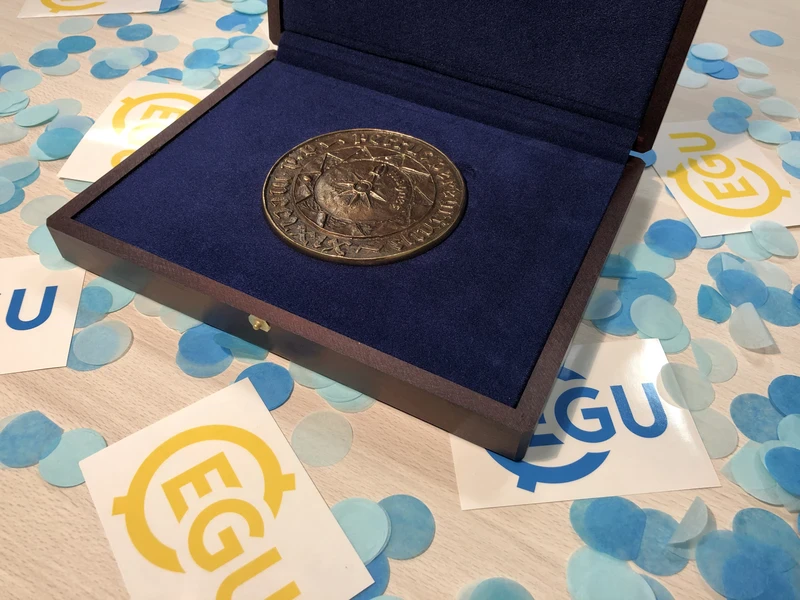
Medal and Award lectures
- ST Division Outstanding ECS Award Lecture by Samuel Badman (MAL50-ST: 09:00–09:20 (CEST) Room M1)
- Hannes Alfvén Medal Lecture by Zdeněk Němeček and Jana Šafránková (MAL18-ST: 09:40–10:10 (CEST) Room M1)
- Arne Richter Award for Outstanding ECS Lecture by Nivedita Sairam (MAL6-NH: 10:45–11:15 (CEST) Room E2)
- Alfred Wegener Medal Lecture by Thomas F. Stocker (MAL2: 12:45–13:45 (CEST) Room E1)
- ERE Division Outstanding ECS Award Lecture by Wenzhuo Cao (MAL39-ERE: 14:00–14:30 (CEST) Room D3)
- HS Division Outstanding ECS Award Lecture by Larisa Tarasova (MAL44-HS: 16:20–16:50 (CEST) Room C)
- SSP Division Outstanding ECS Award Lecture by Matthias Sinnesael (MAL48-SSP: 16:35–16:45 (CEST) Room -2.20)
Integrated Stratigraphy: Best Practices in Age-Depth Modelling & First Outcomes of the TIMES Initiative
Earth history is marked by significant disruptions in global climate, changes in geochemical cycling, and faunal turnover events. The investigation of these events across Earth history is based on accurate and integrated stratigraphy, utilizing a broad range of geological and geophysical techniques, unique stratigraphic features, and established and novel paleoclimate and paleoenvironmental proxies. This session will bring together specialists in all branches of stratigraphy, geochronology, paleoclimatology, and paleontology, spanning from the Archean to the Holocene, to introduce new techniques and methods that help improve the stratigraphic and paleoenvironmental toolbox.
SSP2.6: Orals: 14:00–17:35 (CEST) Room -2.20
EGU26 Award & Medal Celebration
In 2026 the European Geosciences Union (EGU) selected 52 recipients of our prestigious Union Medals and Awards, Division Medals, and Division Outstanding Early Career Scientist Awards. These individuals are honoured for their important contributions to the Earth, planetary and space sciences and during the week of EGU26 many of them have been giving an invited Medal or Award lecture sharing their work. The winners of this year’s Medals and Awards are also being celebrated this evening at a special Award Celebration.
Read more about all our medallists here.
MAL0 17:30–19:30 (CEST) Room E1
Have we broken the Earth’s water cycle? Pathways from Planetary Boundaries to local Safe Operating Spaces
The planetary boundaries framework defines a safe operating space for humanity, measuring with indicators and thresholds how pressures on the environment have destabilized the Earth system with profound consequences for environmental health, economic development and social equity. The freshwater boundary, initially defined as consumption of no more than 4000 cubic kilometres of freshwater per year, has now been considered transgressed. Yet this global figure conceals essential details: how are pressures spread across regions and sectors, and how do surface and groundwater each contribute? If these combined pressures are indeed disrupting the Earth’s water cycle, what actions can we take to bring it back onto a sustainable path? This Union-wide Symposium brings together diverse perspectives on how water, land use and ecological systems, respond across levels to climate change and changing human activities, from the global dimension to national policies and local river basin management. The discussion will highlight both research advances and operational strategies that the geoscience community can mobilize to confront these challenges, empower stakeholders, and identify pathways to more sustainable management within the planet’s freshwater boundaries.
US5: 10:45–12:30 (CEST) Room E1
Geoscience Games Night!
Do you enjoy games and science? Join the Games for Geoscience Team for an immersive evening of geoscience gaming as we delve into the depth of our planet’s challenges and wonders by gaming with colleagues! This networking event provides games for many interests, including card games, board games and video games.
Join the event from 18:00–19:30 (CEST) in Foyer D and try your hand at some geoscience games!
EGU Science for Policy Help Desk
Do you have questions about science for policy? Want to get advice on engaging with policymakers in your region of Europe? Stop by the EGU Science for Policy Help Desk at the EGU Booth from 12:00-13:00 daily during EGU26 for personalised guidance from people working at the science-policy interface and to discuss effective ways to share your expertise directly with policymakers!
NET3 12:00–13:00 (CEST) EGU booth – Hall X2
The costs of Natural Hazards: direct, indirect, tangible and intangible aspects
Natural hazards pose serious threats to human health, settlements and the environment. The nature of impacts can be monetizable or hard to measure through economic metrics. Impacts can occur immediately due to the effects of a physical forcing or might persist, evolve and aggravate or resolve in time. This session will gather researchers interested in the scientific advances related to the multiple facets of natural hazard impacts, i.e., direct, indirect, tangible and intangible losses, in both theoretical and practical aspects of impact assessment, with a view to fostering interdisciplinary dialogue and advancing the field.
NH9.2: Orals: 08:30–12:25 (CEST) Room E2, onsite posters: 14:00–15:45 (CEST) Hall X3
From research to operations: advanced hydrometeorological forecasting and early warning at various scales and horizons
Hydrometeorlogy exists at the critical intersection between the land surface and the lower atmosphere, examining the way that water and energy moved between them. Particularly relevant in rainfall-induced hazards, flash floods and other hydro-geophorphic hazards, this session aims to advance probabilistic hydro-meteorological forecasting from research to operations (and operations to research) across spatial scales and time horizons. New studies presented will illustrate current progress in monitoring, modeling, and forecasting of rainfall-induced hazards (including their impacts) and discuss how advanced hydrometeorological ensemble approaches are to be scientifically robust while also being user-centric, impactful, and effectively communicating uncertainty to support decisions.
HS4.1 PICO: 10:45–12:30 (CEST) PICO spot 2
Paleomagnetic Variations and Geomagnetic Field Modelling: Data, Simulations, and Future Challenges
This session explores palaeomagnetic records, palaeosecular variation and geomagnetic field modeling through the integration of directional, absolute, and relative palaeointensity data from palaeomagnetic, archeomagnetic, and historical observatory records. By combining experimental data with numerical simulations and statistical approaches, we aim to advance understanding of geomagnetic field behavior across a wide range of spatial and temporal scales. The session will include presentations of new palaeomagnetic data, directional and intensity datasets, methodological developments, regional to global reconstructions, and innovative perspectives that enhance our ability to model and interpret the evolution of the Earth’s magnetic field through time and space.
EMRP3.3 Orals: 16:15–18:00 (CEST) Room -2.31, Onsite posters: 10:45–12:30 (CEST) Hall X2
Land use, land management, and land cover change (LULCC) and their effects on the Earth system
Human activities on land, also called 'Land use, land management, and land cover change', shape the climate by altering land-atmosphere fluxes of carbon, water, energy, and momentum. An increasing focus on land-based climate mitigation and adaptation strategies to meet more stringent targets has expanded the range of land management practices considered specifically for their potential to alter terrestrial carbon cycling or mediate favorable environmental conditions. This focus has also called attention to potential tradeoffs between climate-centric aspects of land use, land management, and land cover change, and its influences on biodiversity, hydrology and other environmental factors. This session will explore how advancements in modelling and measurement techniques are opening new possibilities to better describe land use, land management, and land cover change and its effects on the Earth system at multiple temporal and spatial scales.
BG3.7 Orals: 10:45–12:30 (CEST), 14:00–18:00 (CEST) Room L3, Onsite posters: 16:15–18:00 (CEST) Hall X1
Climate Change and Global Health Risks from Interdisciplinary Perspectives
Climate change is reshaping the conditions that sustain human health. Rising temperatures, shifting precipitation patterns, and intensifying extremes are linked to diverse risks, from heat-related illness, kidney disease, and suicide to mortality from wildfires, tropical cyclones, and infectious diseases. These impacts extend beyond health to affect labor capacity, energy demand, and economic productivity, underscoring the interconnectedness of climate and society. This session will share new studies that investigate the different pathways linking climate extremes to human health and well-being worldwide, especially highlighting those that leverage diverse data sources, including observations, health and socio-economic data, reanalyses, climate models, large ensembles, and AI-based models, to deepen our understanding and improve prediction and projection across various time scales.
ITS2.4/CL0.18 Orals: 10:45–12:20 (CEST) Room -2.62, Onsite posters: 08:30–10:15 (CEST) Hall X5
EGU Exhibition
Don’t miss out the EGU Exhibition where you will get a chance to talk with industry representatives and members of other academic, scientific and publishing organisations. Several of the Exhibitors are running special events throughout the week, check the Exhibition events portal for a range of events.
Today at the Open Science and Data Help Desk lunchtime sessions: UXarray: A Python package for the analysis of kilometer-scale atmosphere and ocean model outputs (John Clyne, National Center for Atmospheric Research)
12:15 – 13:45 (CEST) Booth X207
Opening times of the Exhibition:
Monday, 4 May to Thursday, 7 May 2026: daily from 10:00 to 18:00 (CEST)
Friday, 8 May 2025: 10:00–13:00 (CEST)
List of Exhibitors
Meet EGU - at the EGU Booth in Hall X2 and the 25 years of interactive publishing booth in the Entrance Hall
Talk to the volunteers who make EGU happen; from giving out awards and funding, to making decisions about our publications and the General Assembly, come and Meet EGU!
- Meet the co-chief editor of Biogeosciences, Tina Treude (25 years of interactive open-access publishing booth ): 10:00–11:00 CEST
- Meet the Geodesy division team (EGU booth ): 10:15–11:15 CEST
- Meet the Outreach Committee (EGU booth ): 11:30–12:30 CEST
- Meet the executive editors of Weather and Climate Dynamics (25 years of interactive open-access publishing booth ): 12:00–13:00 CEST
- Meet the Cryospheric Sciences division team (EGU booth ): 12:30–13:30 CEST
- Meet the executive editors of Natural Hazards and Earth System Sciences (25 years of interactive open-access publishing booth ): 13:00–14:00 CEST
- Meet the editors of The Cryosphere (25 years of interactive open-access publishing booth ): 14:00–15:00 CEST
- Meet the Education Committee (EGU booth ): 14:00–15:00 CEST
- Meet the editors: for Early Career Scientists (25 years of interactive open-access publishing booth ): 15:00–16:00 CEST
- Meet the Energy, Resources and the Environment division team (EGU booth ): 15:45–16:15 CEST
- Meet the editors of Geoscientific Model Development (25 years of interactive open-access publishing booth ): 16:00–18:00 CEST
About
EGUtoday helps you keep up with the many activities at the General Assembly by highlighting sessions and events from the programme. If you have comments, email the editor Hazel Gibson at communications@egu.eu. The newsletter is available at https://www.egu.eu/egutoday/ and on the EGUapp.
The Assembly Online
LinkedIn
Instagram
YouTube
Facebook
Mastodon
Bluesky
blogs.egu.eu, geolog.egu.eu
www.egu.eu