|
The LOUPE
|
|
Issue 132, January 2026
|
|
|
The year-round resource for EGU members
|
|
|
Geoscience for the benefit of humanity and the planet
|
|
|
|
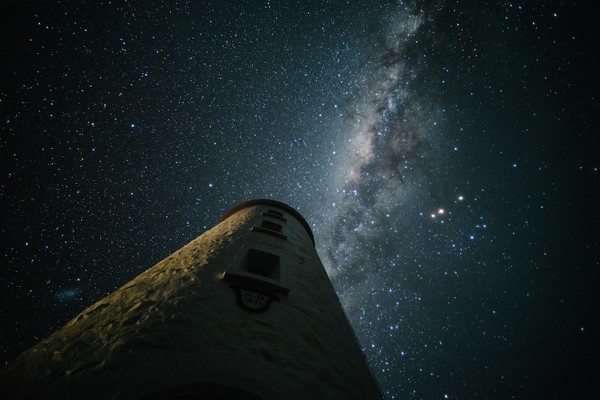
Meet me at the lighthouse (EGU19 Photo Competition winner)
Credit: Vytas Huth
(Source)
|
|
Reaching for the starsBe inspired by stories of taking risks and making discoveriesJanuary is often seen as a time of new beginnings, of re-invention and fresh starts, but in northern Europe it's still cold and dark, and not exactly the kind of environment that encourages launching into a 'new you'! Instead, taking advantage of a time for reflection, we looked for stories of people who reached further than they thought they could, who drew from deep wells of perseverance and curiosity to make new discoveries and explore new ideas. Whether the risks had an element of tragedy, as guest blogger Catarina Aydar described with the first attempt of a teacher, Christa McAuliffe, to go to space onboard the ill-fated Challenger, or triumph, like Jacobus Kapteyn's first ever statistical analysis of the motion of the stars, described by guest blogger Sabrina Minnick, it's clear that science has always been a place to take risks, learn, and try again. As astrobiological chemist Silke Asche says in her GeoTalks interview on the search for life on other planets, "I hope that this growing knowledge [into the origins of life] will pave the way for bold, large-scale experimental studies of messy, long-term reaction systems, using a diverse library of building blocks and selection pressures. Even though designing, funding, and analyzing those experiments will be a real challenge, the outcome could be very interesting." If you are excited to share your ideas and innovations with your colleagues you may have submitted your abstract to EGU26 - as part of our record-breaking, over 21,000 abstract submissions!! More information will be available on your abstracts between 20-23 February, but it's not too early to get your registration and start planning how to make the most of your attendance; check out guest blogger András Zlinszky's tips on the Geolog (Part 1 and Part 2). We are also very excited to have named our two Artists in Residence chosen for EGU26: Núria Altimir and Fabian Wadsworth, so head over and check out their plans for the meeting. Lastly, you can now help to support your community at EGU26 by volunteering to our Peer Support programme that helps General Assembly novices navigate the meeting! Both novices and experienced attendees can now apply to take part by 31 March 2026. |
|
|
SCIENCE FOR POLICY
|
Apply for the EGU-IEEP policy mentoring schemeThe EGU recently announced its 12-month hybrid mentoring scheme in collaboration with the Institute for European Environmental Policy (IEEP). The scheme will provide early and mid-career scientists with the opportunity to work alongside IEEP members within Europe’s policy community. The selected candidate will spend three weeks in 2026 in Brussels with all travel expenses covered, allowing them to effectively engage in the IEEP’s policy projects, network with experts, and play a key role in shaping meaningful initiatives! If you are interested, don't miss out, the deadline is midnight CET on 13 February 2026. Apply now, and read more about the scheme here. |
|
|
Splinter meeting submissions for EGU26If you are a policymaker attending EGU26, did you know you can organise your own special meetings? Splinter meetings are side events organised by on-site attendees of the General Assembly, which can be reserved for up to two successive time blocks in specific rooms. Not limited to any one topic, EGU provides access to splinter meetings for both non-commercial and commercial participants, though non-commercial meetings always have priority. Non-commercial splinter meetings are those not primarily directed towards commercial advantage or monetary compensation. Get more details here. |
|
|
|
|
|
|
|
JOURNAL WATCH
|
|
|
|
|
|
|
|
|
|
ANNOUNCEMENTS
|
EGU announces the launch of a new open access journal: Earth Observation!Following the efforts of EGU members, we are delighted to share a new journal, Earth Observation; an open access, publicly peer-reviewed journal, dedicated to the discussion and publication of high-quality studies and original research on Earth observation technologies and methods. EO is now open for submissions, with article processing charges (APCs) waived during this launch phase to encourage broad community participation. Read more here. |
|
EGUwebinar: How to organise impactful and inclusive scientific eventsWondering how to run a scientific event, e.g. at the EGU General Assembly, that has genuine impact and includes a diverse range of researchers? Watch this EGUwebinar with EGU's NP Division President Davide Faranda to learn how! |
|
|
UPCOMING DATES
|
JOB VACANCY: IT specialist at EGU Executive OfficeEGU is currently seeking a full-time, permanent IT Specialist, to be based in the Executive Office in Munich, Germany to support the work of the IT Manager, read the full position details here. Applications will be reviewed from midnight (CET) 6 February until the position is filled. |
EGUwebinar: Mental Health in Academia: Obstacles, Advocacy and InclusionHow can academics create institutional change towards more inclusive and balanced working environments in the face of a growing mental health crisis? Join this special EGUwebinar on Monday 9 February at 16:00 CET to explore how both individuals and institutions can best respond to the mental health crisis in academia. Register today! |
EGUwebinar: Climate of the Past 20th Anniversary: Palaeomonsoon VariabilityResearch into palaeomonsoon variability provides insights into what drives of monsoon variability and helps predict future changes in monsoon behavior, which are vital for agriculture and water resources. This webinar is part of a special series celebrating 20 years of Climate of the Past, an interactive journal of the European Geosciences Union. As part of a special series celebrating 20 years of EGU journal 'Climate of the Past', join this EGUwebinar at 13:00CET, 11 February to hear leaders in the field address these ideas. Register here today. |
EGU Science for Policy HangoutCome virtually network with those working at the science-policy interface! Register for our next #Sci4Pol Hangout at 14:00 CET on Monday 2 March. |
Help new attendees of EGU26 by volunteering to offer Peer SupportIf you have attended the EGU General Assembly before you know how confusing it can be for new people. Why not offer your help by volunteering to give a little Peer Support during the week of the meeting. Applications for experienced and novice attendees are now open - submit your application by 31 March 2026 and help everyone in the EGU community feel welcome! |
|
EGU BLOGS
|
Geolog, the Union’s official blog |
|
|
Geodynamics Division blog |
|
|
Geolog, the Union’s official blog |
|
|
Tectonics and Structural Geology Division blog |
|
|
Solar-Terrestrial Sciences Division blog |
|
|
Cryospheric Sciences Division blog |
|
|
Geolog, the Union’s official blog |
|
|
Biogeosciences Division blog |
|
|
Planetary and Solar System Sciences Division blog |
|
|
©2026 European Geosciences Union.
All rights reserved.
|
|
Our mailing address is:
EGU - European Geosciences Union e.V.
Kastenbauerstr. 2
81677 Munich, Germany
|
|
|
|
|