Division on Geochemistry, Mineralogy, Petrology & Volcanology gmpv.egu.eu
Division on Geochemistry, Mineralogy, Petrology & Volcanology
President: Holly Stein
(Emailgmpv@egu.eu)
Deputy President: Giuseppe La Spina
(Email)
ECS Representative: Piyal Halder
(Emailecs-gmpv@egu.eu)
The disciplines Geochemistry, Mineralogy, Petrology, and Volcanology (GMPV) are the nexus of Earth processes. The GMPV Division addresses the chemical and physical properties of minerals that build our planet and their impacts on humanity and Earth’s habitability. The topics that fall under the GMPV purview include volcanic unrest and eruption; formation and evolution of continental crust; the role of atmospheric composition in habitability, via the geochemical record linked to mass extinctions; and the chemistry of the deep Earth, from mantle to core, including isotope geochemistry and radiometric dating. The science covered by GMPV also includes ocean chemistry and its control by ocean floor magmatism, weathering and erosion of continental crust, or cosmic input. The GMPV scope includes the traceability of fluid migration within the Earth through the study of ore deposits, geothermal systems as well as modifications of deep-seated rocks. In sum, the disciplines encompassed by the GMPV Division collectively describe the workings of complex and inter-connected systems in the Earth, providing the opportunity to speculate about other potentially habitable planets.
We live in a world full of mysteries and wonders… or at least that is the view of most ancient philosophers, such as perhaps Plato in ancient Greece. Atlantis, the legendary island that lay in the middle of the Atlantic Ocean, is said to have been completely destroyed overnight. To this day, numerous artists and scientists have sought to unravel the mystery of its demise, sometimes suggesting a volcanic eruption. Today, some studies suggest an interesting connection to the island …
Iceland is pure geology. When I travelled there in 2015, it felt like stepping into another world: surreal, raw, and unforgettable. Geology wasn’t just something to observe or study: in Iceland, it’s something you inhabit. The landscape doesn’t just sit there, it feels alive. It hums, it shifts, it speaks. And whether you’re a geologist or not, you can’t help but listen. To make the experience even more immersive, my friends and I put together the perfect playlist: Icelandic artists …
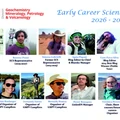
Hi, The 2026 General Assembly is over. Now it’s time to introduce our existing ECS Network, which has been enriched by a few new members. Let’s meet our ECS Network members- ECS Representatives (2025-2026) (1) Piyal Halder Hello my GMPV brothers and sisters, I am the ECS Representative of the GMPV division, EGU, for 2025-2027. I am presently working as a Postdoctoral Research Associate in the Deep Earth and Crustal Evolution Studies Group of the Petrology & Geochemistry Division at …
Hey folks, Today is the last day of the EGU26. Let’s have a quick look at today’s GMPV sessions- Session Code Time & Place Session Title Convenor & Co-Convenors Session Overview GMPV4.3 Oral: 08:30–12:30 Room: K1 What Makes Earth So Special: Global Cycles of Volatiles Convener: Alessia Borghini; Co-conveners: Carla Tiraboschi, Sally Gibson, Michał Bukała The Session will particularly focus on- (i) deep volatile cycles of H₂O, CO₂, halogens and sulphur; (ii) volatile mobilisation and transfer during subduction in COHNS …
The 2026 Robert Wilhelm Bunsen Medal is awarded to
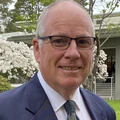
Giovanni Chiodini for influential and transformative work in volcanology and gas geochemistry to elucidate Earth’s degassing processes, and long-lasting contributions to global volcano monitoring.
Arne Richter Award for Outstanding Early Career Scientists
The 2026 Arne Richter Award for Outstanding Early Career Scientists is awarded to
Claire Harnett for exceptional field and experimental studies modelling the growth and collapse of volcanic structures, and geotechnical applications leading to improved assessments of volcanic instability and hazards.
The 2025 Robert Wilhelm Bunsen Medal is awarded to
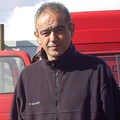
Trevor Russell Ireland in recognition of his impact on understanding the history and processes of Earth and the Solar System through pioneering developments in spectroscopy instrumentation and his vision for applications.
The 2025 Division Outstanding Early Career Scientist Award is awarded to
Renée Jade Tamblyn for groundbreaking work in petrochronology of subduction processes, komatiite hydration and production of H2 as an energy source for early life, as well as her role in developing a new in-situ method for Lu-Hf geochronology.
Outstanding Student and PhD candidate Presentation (OSPP) Award
The 2025 Outstanding Student and PhD candidate Presentation (OSPP) Award is awarded to
Peter Lindquist The geologic record of hydration and dehydration in the subducting slab: Epidote minerals record alteration and metamorphism before and during subduction
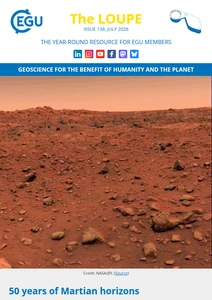
In our July issue, we are looking back on 50 years of Martian photography, learn more about science communication with twice the Simon Clark, don't miss your chance to apply for the Science for Policy Pairing Scheme. Also applications are open to volunteer with the EDI Committee or the Art-Science Working Group, the call for sessions for EGU27 is open and don't miss your chance to nominate someone to e the Union's next Early Career Scientist (ECS) Union-wide Representative or Treasurer!