|
The LOUPE
|
|
Issue 138, July 2026
|
|
|
The year-round resource for EGU members
|
|
|
Geoscience for the benefit of humanity and the planet
|
|
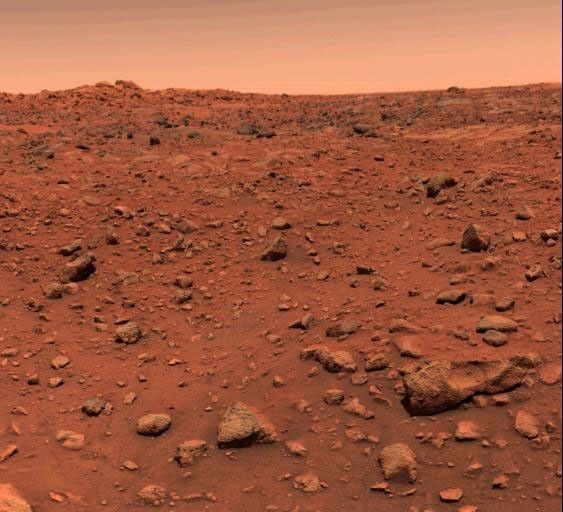
50 years of Martian horizonsNew ways to see our universe that changed science foreverThis month marks 50 years since humans ever saw a photograph from another planet's surface; the grainy shots of Mars taken by the Viking 1 lander in July 1976. As Asmae Ourkiya described in their blog, the image gave humanity a brand new horizon to look towards, and spurred a flurry of research into Martian soil, atmospherics and xenobiology that lasts to this day! We also learned about the ways our understanding of our own Earth functions with an analysis of the newest version of the World Stress Map, published in EGU journal Solid Earth. Guest author Stefano Corradini (and team) wrote an important opinion piece on a different kind of stress; the tension between scientific work and the responsibilities that scientists have towards society, in his blog 'The myth of scientific neutrality'. EGU's Josephine Cakuru wrote a blog detailing all the ways you can get involved with EGU, from writing for us as Stefano did, to funding opportunities, resources, communities to join and more! If you are looking to get involved right now, why not apply to join the EDI Committee or the Art-Science Working Group, as both are currently looking for new members. Apply for either by 10 August. We are now accepting proposals for sessions, Geopanels (formerly Union Symposia or Great Debates) and short courses for EGU27 by 23 September 2026. Finally don't forget to nominate candidates for the Treasurer and Union representative of the Early Career Scientists for the Autumn Elections, by 8 September. |
|
|
SCIENCE FOR POLICY
|
Open call for EGU's 2026 Science-Policy Pairing SchemeIf you’re curious about science for policy and would like to experience life inside the European Parliament, then don’t miss your chance to apply for the 2026 EGU Science-Policy Pairing Scheme! We are pleased to announce that this year’s pairing will be with Dimitris Tsiodras, a Member of the European Parliament. The successful applicant will go to Brussels 3-6 November 2026. You can read more about the Pairing Scheme here and learn about the experiences of previous Pairing Scheme participants here. Submit your application form, attaching a CV (max 1-page) and a cover letter outlining your motivation for participating in the Pairing Scheme, by 1 September 2026. |
|
|
GeoTalk: Meet Trevelayne Faller, Communications Officer for EU-funded raw materials researchThis month EGU Science for Policy Assistant Damla Posta spoke with Trevelayne Faller about her work with the European Critical Raw Minerals Act, the policy brief she was involved in writing for it and how geoscientists can get more involved with policymaking in this essential field. Read the full discussion on the EGU Geolog here. |
|
|
|
|
|
|
|
JOURNAL WATCH
|
|
|
|
|
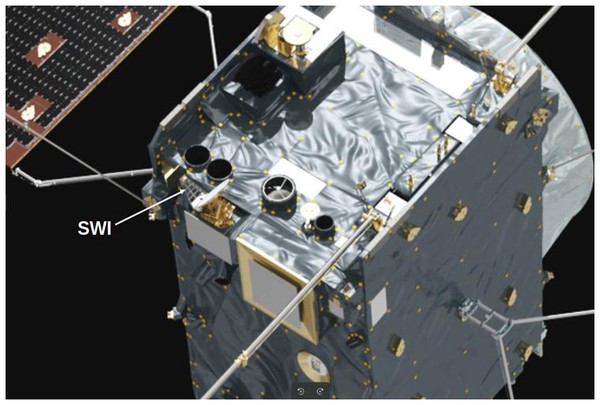
"The Jupiter Icy moons Explorer (Juice) was the first spacecraft ever that performed a combined gravity assist using both the Moon and Earth in succession. The double flyby required highly precise navigation to succeed. The Lunar-Earth Gravity Assist allowed Juice to make a shortcut through the inner solar system on its way to Jupiter, using less fuel than would have been otherwise required." Hartogh et al (2026) Juice/SWI during the Lunar-Earth-Gravity-Assist (LEGA) – Part 1: General overview Annales Geophysicae |
|
|
|
ANNOUNCEMENTS
|
EGU Executive Director Philippe Courtial is awarded JpGU International Contribution AwardEGU's Philippe Courtial was this year honoured with the prestigious JpGU international Contribution Award at the 2026 joint JpGU-AGU scientific meeting in Chiba, Japan, for his outstanding, and continuing efforts to develop and strengthen the EGU-JpGU international partnership. |
|
EGUwebinar: SciComm 101: how to share science onlineA special treat this month in the EGUwebinar: TWO Simon Clarks!! EGU's Simon Clark is joined by Simon Clark, YouTuber and science communicator to discuss the best ways to share accessible and engaging scientific content online. Watch it on our YouTube channel today. |
|
|
UPCOMING DATES
|
EGU Science for Policy HangoutCome virtually network with those working at the science-policy interface! Register for our next #Sci4Pol Hangout at 14:00 CEST on Monday 3 August. |
EGUwebinar: Introducing Project Cosmos, The World's Largest Climate Research DatabaseKeeping track of new publications can be a very difficult task, especially in the field of climate science. To address this, Carbon Brief, the award-winning website reporting on climate change, has developed the world’s largest database of climate change research: Cosmos. In this EGUwebinar on 6 August at 12:00 CEST, Ayesha Tandon and Thomas Pearson from Carbon Brief will introduce the project and explain how to use the database. Register today! |
|
|
|
EGU BLOGS
|
Geolog, the Union’s official blog |
|
|
Tectonics and Structural Geology Division blog |
|
|
|
|
|
|
Geodynamics Division blog |
|
|
Geochemistry, Mineralogy, Petrology & Volcanology Division blog |
|
|
©2026 European Geosciences Union.
All rights reserved.
|
|
Our mailing address is:
EGU - European Geosciences Union e.V.
Kastenbauerstr. 2
81677 Munich, Germany
|
|
|
|
|