|
EGU26: ASK A SCIENCE FOR POLICY PRACTITIONER OR POLICY EXPERT
|
|
|
|
During the General Assembly (4 - 8 May 2026), EGU will be giving researchers the opportunity to have their questions answered by policymakers and those working on the science-policy interface, through small group meetings. Meetings will be available both on-site (in Vienna) and virtually at the General Assembly but places are limited. To secure a meeting with one of the science for policy practitioners, please submit your question(s) or topic that you would like to talk about by 20 April 2026 and you will be paired with a practitioner who can discuss them. Read more and ask your questions here! |
|
|
SUBMIT A PROPOSAL TO RUN AN EGU SCIENCE FOR POLICY WORKSHOP
|
|
The EGU Science for Policy Working Group is inviting proposals to deliver a workshop series in 2026, with funding of up to €2000! The overall aim of the series is to equip EGU members with practical skills, tools, and confidence to translate scientific knowledge into policy-relevant insights and to engage constructively with decision-makers. The workshop series will take place between August and December 2026, consisting of three to four sessions delivered over a two-week period. Relevant topics include science advice, policy engagement, evidence-informed policymaking, knowledge brokerage and more. Proposed sessions should emphasize interactive and practice-oriented learning. If you are interested in sharing your expertise in an interactive workshop series, please submit your proposal by Friday, 24 April 2026 including an outline of your relevant experience, and a description of the proposed workshop series and budget. More information and application details are available here. |
|
|
HELP GET YOUR SCIENCE INTO POLICY AS A DIVISION POLICY OFFICER
|
|
Did you know you can get involved in Science for Policy activities with the EGU divisions?! There are seven EGU Divisions that are currently seeking a new Division Policy Officer. These volunteers support their scientific community by sharing relevant resources and opportunities through, for example, EGU General Assembly sessions, social media, webinars, and campfires, and are welcome to propose additional activities. They also work with the EGU’s Policy Programme to identify the policy needs of European policymakers. Here are the EGU Divisions that are currently seeking new a Division Policy Officer: If you are interested, please email the relevant Division President (through the link on their website) who can tell you more about the role and if that Division still has a vacancy. If so, you will need to submit a single document with a combined CV (maximum 2 pages) and cover letter. You can read more here! |
|
|
OPEN CALL: EUROPEAN COMMISSION BLUE BOOK TRAINEESHIPS
|
|
In our February newsletter, we shared a GeoPolicy blog post about Marie Cavitte's European Commission Blue Book traineeship experience. The traineeship application period for the October 2026 cohort is currently open! As Marie mentioned, these 5-month traineeships not only provide a stepping stone for those looking to transition into a more policy-driven career but also give scientists who want to stay in research new insights into how evidence can be used to support decision-making processes! The Commission doesn’t specifically target scientists in the application process but often those with specific expertise are welcome. You can learn more about the Traineeship and apply here before 10:00 CEST on 7 April 2026. |
|
|
APPLY FOR THE MODEL EUROPEAN PARLIAMENT FOR EARLY CAREER SCIENTISTS (MEP4ECS)
|
|
Institute for Sustainable Society and Innovation (ISSNOVA) is organising a Model European Parliament for Early Career Scientists (MEP4ECS). This is an immersive simulation of the European Parliament designed for Early Career Scientists who are EGU Members. MEP4ECS will take place in Brussels in July 2026. The programme combines interactive training, collaborative learning, and practical policy engagement. Participants will gain insights into translating scientific knowledge into policy-relevant dialogue, and experience how European climate and environmental policies are debated, negotiated, and shaped. If you are an Early Career Scientist with a strong interest in climate and environmental policies, feel free to explore more here. Applications are open until 28 March 2026. |
|
|
EARLY CAREER GROUP REVIEW OF THE SEVENTH ASSESSMENT REPORT (AR7) OF THE IPCC WGI
|
|
The Intergovernmental Panel on Climate Change (IPCC) is currently working on its Seventh Assessment Report (AR7). Early career researchers have the chance to participate in the review of the First Order Draft (FOD) of the Working Group I (WGI) The Physical Science Basis. The review period for runs from 10 August to 2 October 2026, with the training beginning in late April to early May 2026. This group review is coordinated by a consortium of early career networks led by the Association of Polar Early Career Scientists (APECS) to provide practical experience in strengthening policy-relevant scientific assessments. Eligible applicants include advanced Master’s students, PhD candidates, postdoctoral researchers, and academics or professionals within 10 years of PhD completion. If you are willing to contribute, you can find more information here and apply until 12:59 CET Tuesday on 24 March 2026! |
|
|
©2026 European Geosciences Union.
All rights reserved.
|
|
Our mailing address is:
EGU - European Geosciences Union e.V.
Kastenbauerstr. 2
81677 Munich, Germany
|
|
|
|
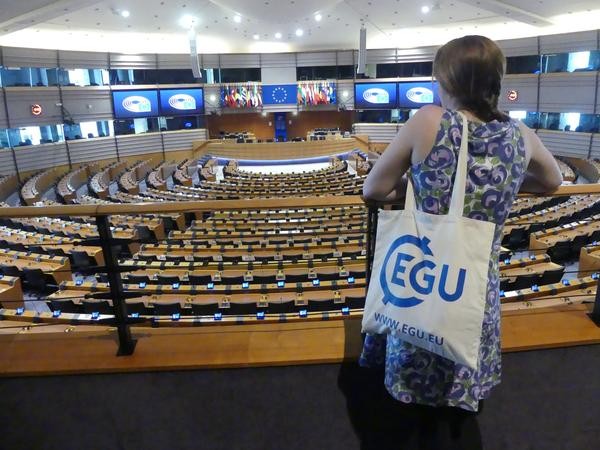
Banner image credit: European Union 2015 – European Parliament via Flickr
|
|
|