

EGU logo

European Geosciences Union

www.egu.eu

EGU

News

Apply now for EGU’s Science Journalism Fellowship 2026 (up to €5k)
  • 11 May 2026

The EGU is now accepting applications for the 2026 Science Journalism Fellowship competition. The fellowships enable journalists to report, in any European language, on ongoing research in the Earth, planetary or space sciences, with successful applicants receiving up to €5000 to cover expenses related to their projects, apply by 17 June 2026.


EGU26 – by the numbers
  • 11 May 2026

Thanks to the enthusiastic efforts of our members and volunteers, EGU26 was another record breaking year with an amazing 22,497 people participating in the General Assembly, both in Vienna and online!


On the ground or in the atmosphere? New satellite data can help characterize and pinpoint destructive events
  • Press release
  • 6 May 2026

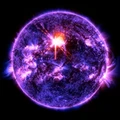
Solar storms can quietly disrupt satellites, power grids, and communication systems across the globe. After a 2022 geomagnetic event knocked out dozens of Starlink satellites, the risks are no longer hypothetical. At EGU26, scientists unveil Swarm-AWARE, a new ESA project using satellite data and machine learning to distinguish space weather signals from natural hazards, paving the way for smarter forecasting and more resilient infrastructure.


Latest posts from EGU blogs

Pride month in the era of DEI rollbacks: Reflections on resilience, and why pride was a riot after all

Pride month arrives this year against a backdrop of institutional irony. In the United States, federal research funding has been thoroughly weaponised and forced a massive scientific brain drain across the Atlantic. In Europe, a multi-million-euro effort to capture that exiled talent is underway, even as Europe’s own domestic politics fracture along the exact same ideological fault lines. For queer researchers, especially those in the geosciences, this transatlantic war over Equity, Diversity, and Inclusion (EDI) compromises networks for international collaboration, …


Geodesy Cartoons – A Creative Tool for Outreach and Education

Geodesy is fundamental to understanding our dynamic planet. From monitoring sea-level rise and glacier melt to maintaining precise terrestrial reference frames for GNSS and Earth observation, geodesy provides the scientific backbone for many disciplines represented within the EGU and beyond. Despite its importance, geodesy often remains invisible outside the scientific community. Even within geosciences, many people use geodetic products daily without fully realizing the complex infrastructure and science behind them. To help make geodesy more visible and accessible, the International …


The Arctic’s Blind Spot: Why Satellites Struggle Where Ice Meets the Coast

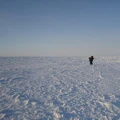
The first time I stood on sea ice, I could not tell which direction the coast was. A community member named Bryan could. That gap in situational awareness, between what a trained remote sensing scientist could read from the landscape and what a local hunter understood instinctively, turned out to mirror almost exactly the gap in our satellite data: ICESat-2 produces reliable freeboard across the central Arctic but goes systematically blind within 25 km of every coastline. This post traces …