President: Giorgia Stasi
(Emailere@egu.eu)
Deputy President: Johannes Miocic
(Email)
ECS Representative: Thanushika Gunatilake
(Emailecs-ere@egu.eu)
The EGU brings together geoscientists from all over Europe and the rest of the world, covering all disciplines of the Earth, planetary and space sciences. This geoscientific interdisciplinarity is needed to tackle the challenges of the future. A major challenge for humankind is to provide adequate and reliable supplies of affordable energy and other resources. These should be obtained in environmentally sustainable ways, which is essential for economic prosperity, environmental quality and political stability around the world. One goal of the division Energy, Resources & the Environment (ERE) is to be a leading discussion forum for these issues. The core of the division consists of experts in various fields that will help meet the mutually coupled challenges of energy, resources and the environment.
Our Team
Giorgia Stasi
- President
- Programme Group Chair
- Email
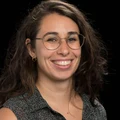
Giorgia is a geologist specialized in Ore Geology and Applied Geophysics. She works at the Geological Survey of Belgium (RBINS) with a focus on critical raw material and technology development, and she is currently enrolled in a PhD program in Applied Geophysics at the University of Liège, Belgium. Her research focuses on the development of geophysical techniques for deep mining and robotic autonomous exploration. She is also active in geoscience communication and dissemination activities to the public.

Johannes Miocic
Johannes is a geologist with a background in sedimentology and structural geology. His research focuses on the secure and sustainable use of the subsurface for the energy transition, including carbon dioxide and hydrogen storage and geothermal energy. He is particularly interested in (1) how pore-scale mechanisms influence reservoir scale processes, (2) faults and (3) what role subsurface utilisation can and should play in a renewable energy system.
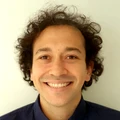
Luis Ramirez Camargo
Luis is an Assistant Professor in the Energy & Resources Group at the Copernicus Institute of Sustainable Development, Utrecht University. He has convened EGU sessions on spatial and temporal modelling of renewable energy systems since 2016. His research spans integrated spatial and energy planning, energy meteorology, renewable energies, spatiotemporal modelling, and GIS. He works on wind power integration, energy communities, positive energy districts, and the global scalability of high‑resolution models for renewable energy and renewable fuel development. Before joining the Copernicus Institute, he worked and led transdisciplinary energy projects from research institutions in Austria, Belgium, and Germany, and has collaborated widely across Europe and the Americas, with significant experience supporting the energy transition in the Global South.
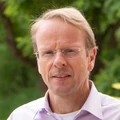
Michael Kühn
- Science Officer
- Publications Officer
- Email
Michael is a geochemist and hydrogeologist by training with a research focus on the numerical simulation of hydrogeothermal systems in the subsurface. This includes quantification of interactions between deep and shallow groundwater systems, geochemical water-rock-interactions, formation of ore deposits, CO2 storage in geologic formations, hydrogeothermal energy provision and nuclear waste disposal.
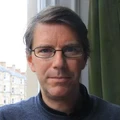
Niklas Heineman
Niklas Heinemann is a Geologist and Geomodeller with extensive experience in both industry and academia. His research focuses on the simulation and analysis of sustainable subsurface storage systems to support the energy transition. Niklas began his academic career with a PhD at the University of Edinburgh, funded by RWE UK, where he investigated CO₂ storage in North Sea formations. He then worked at Ikon Science as a pore pressure specialist and later as a Senior Geologist. Since returning to academia, Niklas has held positions as Postdoctoral Research Associate, Research Fellow, and Lecturer, contributing to research and teaching in geoenergy, hydrogeology, and subsurface flow simulation.
He is currently a Beatriz Galindo Distinguished Professor at the University of Barcelona (Spain) and a Fellow of the Higher Education Academy (UK). Niklas has taught at University in Spain, the UK and China, and he maintains strong industry ties, including a role as Hydrogen Technical Lead for CGG in 2022. He has (co-)authored approximately 40 peer-reviewed publications, with over 4000 citations, and has co-edited a Geological Society Special Publication. Niklas also serves on the editorial boards of Geoenergy and Hydrogen, overseeing submissions related to subsurface hydrogen storage.
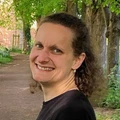
Astrid Riedl-Fajtak
Astrid is a trained environmental engineer, specialised in hydrology and soil physics, as well as waste management. In her current research position, she works in groundwater management and post mining remediation in Eastern Germany. Here, the main focus of her research is in contaminant transport and environmental protection. Her most recent research project focusses on large scale connections of water storage solutions on the intersection of drinking water, groundwater and energy management.
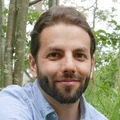
Daniel Ospina
Daniel has a background in sustainability science, and has worked primarily on interdisciplinary integration and synthesis, focused on Earth system science. Over the past five years, he has been increasingly involved in science communication and policy engagement, endeavouring to make key research advances more accessible and relevant to governmental and corporate decision-makers.
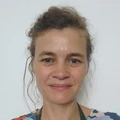
Margret Fuchs
- Short Courses Officer
- OSPP Co-ordinator
- Email
Margret Fuchs focusses her research on luminescence-based geochronology and non-invasive raw material detection. Core topics are the development of new optical sensors tailored for raw material detection, especially laser-induced fluorescence for rare earth elements, and on the integration of sensor into smart systems with the focus on material stream characterisation. She is leading the group of sensors in the Department of Exploration, investigating spectroscopy-based sensors and their industrial applications with focus on reflectance HSI, laser-induced fluorescence, Raman, XRF and LIBS. In recent years, research projects targeted innovative solutions for secondary raw materials in recycling streams. She leads the scientific projects related to the HELIOS lab (multi-sensor system) and LUNA lab (luminescence dosimetry) at Helmholtz-Institute Freiberg for Research Technology, Helmholtz-Zentrum Dresden-Rossendorf.
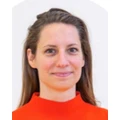
Sarah Weihmann
Sarah Weihmann has a background in geosciences with focus on geomechanics and has been involved in both academic and industry projects in the oil and gas and nuclear waste storage sector. Her ongoing research interests include faults and fractures in geoenergy applications, geological storage of nuclear waste, reservoir geomechanics and numerical simulations. She is currently working at RWTH Aachen.

Thanushika Gunatilake
Thanushika research focuses on numerical modeling of fluids in the subsurface. Her research branches into two main directions: firstly, she delves into the geodynamic processes occurring at the Earth’s surface across various tectonic environments, such as the central Apennines or subduction zones, aiming to unravel the underlying physics of natural earthquakes. Secondly, she dedicates her efforts to exploring the transition towards a net-zero energy system, which involves conducting numerical studies on CO2 sequestration and geothermal exploration.

Annelotte Weert
- ECS Co-representative
- Email
Annelotte is a structural geologist and sedimentologist with a research focus on complex sedimentary reservoirs and subsurface heterogeneity, with a particular interest in inverted rift basin settings. Her research focuses on sedimentological and structural heterogeneity across different spatial scales, and how these influence reservoir behavior. To address this, she combines field observations, subsurface data analysis, and geological modelling. Ultimately, she aims to translate these insights into practical applications that support the energy transition.
Recent awardees
- 2026
- Division Outstanding Early Career Scientist Award
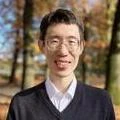
The 2026 Division Outstanding Early Career Scientist Award is awarded to
Wenzhuo Cao for contributions in discovering novel physical mechanisms underlying induced seismicity, and developing advanced coupled multiphysics modelling frameworks.
Read more
- 2025
- Division Outstanding Early Career Scientist Award
The 2025 Division Outstanding Early Career Scientist Award is awarded to
Iman Rahimzadeh Kivi for outstanding contributions to the characterisation and modelling of coupled thermo-hydro-mechanical-chemical (THMC) processes in geo-energy applications and enthusiastic community service.
Read more

- 2025
- Outstanding Student and PhD candidate Presentation (OSPP) Award
The 2025 Outstanding Student and PhD candidate Presentation (OSPP) Award is awarded to
Tim Schöne Effects of the hydrogeochemical variability of pore water in the Opalinus Clay and its surrounding aquifers on uranium migration
Read more

- 2025
- Outstanding Student and PhD candidate Presentation (OSPP) Award
The 2025 Outstanding Student and PhD candidate Presentation (OSPP) Award is awarded to
Yan-Ruei Huang Rethinking Design for Sustainability: A Novel Multi-Objective Optimization Methodology for Sustainable Product Lifecycle Design
Read more
Current issue of the EGU newsletter
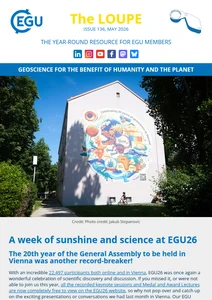
In our May issue, we look back on another amazing General Assembly in Vienna and online, the EGU awards and medals are now open for nominations, funding is now open for public engagement grants, distinguished lecture speakers, science journalism fellowships, an Early Career Scientist career development workshop and more - and there is a vacancy for an Editorial Manager at the EGU Executive Office in Munich!
All this and much more, in this month's Loupe!
Read more
Current issue of the ERE division newsletter
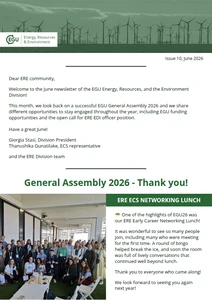
This month, we look back on a successful EGU General Assembly 2026 and we share different opportunities to stay engaged throughout the year, including EGU funding opportunities and the open call for ERE EDI officer position.
Read more