President: Heidi Kreibich
(Emailnh@egu.eu)
Deputy President: Nivedita Sairam
(Email)
ECS Representative: Elisa Grazia Lucia Nobile
(Emailecs-nh@egu.eu)
The Natural Hazards (NH) Division covers all natural hazards that can produce damage to the environment and to the society. Therefore, it is a place where scientists and researchers of various geosciences disciplines meet with sociologists, economists and people responsible for territorial and urban security and planning policies. The aim is to improve the understanding of the evolution of the processes and to discuss new technologies, methods and strategies to mitigate their disastrous effects. The division is structured in eleven subdivisions as follows: Hydro-Meteorological Hazards, Volcanic Hazards, Landslide and Snow Avalanche Hazards, Earthquake Hazards, Sea and Ocean Hazards, Remote Sensing, AI, Data Science & Hazards, Wildfire Hazards, Environmental, Biological and Natech Hazards, Natural Hazards and Society, Multi-Hazards and Climate Hazards. Most of the topics that are treated in the NH Division are also treated in other EGU divisions, which is expected due to the intrinsic transversal nature of the NH Division.
The NH Division is one of the historical Divisions of the EGU that was established when EGU was founded and has been and is one of the largest divisions to which many geo-scientists provide steadily contributions of papers and ideas over the years.
As for all EGU Divisions, an Early Career Scientist Award is established also for the NH Division and is given to young researchers who obtain outstanding results in the assessment and mitigation of natural hazard. In addition, the NH Division awards the Plinius Medal that recognises outstanding interdisciplinary natural-hazard research and the Soloviev Medal that recognises outstanding scientific contributions in fundamental research on natural hazards. Both medals are open for all career stages.
Latest posts from the NH blog
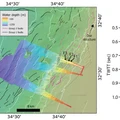
Why Did a Magnitude 6.8 Earthquake Left Malaysia Unscathed?
On 23rd February 2026, Malaysia faced one of the strongest earthquakes ever recorded in its history. A magnitude 6.8 event struck offshore Sabah, the most seismically active state in Malaysia. The event was reported as magnitude 6.8 by MetMalaysia, while the USGS recorded it as magnitude 7.1, with the difference reflecting variations in magnitude estimates […]
Read more
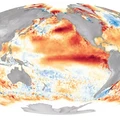
El Niño shouldn’t stay in the classroom: Why everyone should understand one of Earth’s most influential climate patterns
Floods in one region. Droughts in another. Wildfires intensifying across already dry landscapes, while elsewhere intense rainfall triggers landslides and infrastructure disruption. At first glance, these hazard events may seem entirely unrelated. After all, what could a flood on one side of the world possibly have to do with a drought on the other? Yet many of these seemingly disconnected events can be traced back to the same climate phenomenon developing thousands of kilometres away in the tropical Pacific Ocean: …
Read more
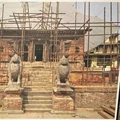
Joining the dots: From overlooked disaster impacts to inclusive disaster risk reduction
A note from the Natural Hazards Division editorial team We would like to open this blog post with our sincere condolences in response to the devastating multi-hazard flash flood that occurred in Nepal and Tibet in late August. In the face of such suffering, messages like this risk sounding hollow. Still, we, as the Natural Hazards Division editorial team, wish to express our solidarity with all families and communities affected and with those making huge sacrifices to support the recovery …
Read more
Recent awardees
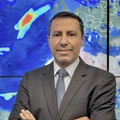
The 2026 Plinius Medal is awarded to
Amir AghaKouchak for outstanding interdisciplinary contributions to understanding and mitigating Anthropogenic Drought, hydrologic extremes, and compound hazards.
Read more

- 2026
- Sergey Soloviev Medal
The 2026 Sergey Soloviev Medal is awarded to
Gerassimos A. Papadopoulos for promoting innovative research on geohazards that led to a new tsunami intensity scale, improving the analysis of foreshock seismic sequences and for the development of tsunami warning systems.
Read more

- 2026
- Arne Richter Award for Outstanding Early Career Scientists
The 2026 Arne Richter Award for Outstanding Early Career Scientists is awarded to
Nivedita Sairam in recognition of exceptional contributions to systemic modelling of compounding and cascading flood impacts.
Read more

The 2025 Plinius Medal is awarded to
Annegret Henriette Thieken in recognition of outstanding contributions to the understanding and mitigation of flood risk, and the design of adaptation management strategies informed by the involvement of affected communities.
Read more

- 2025
- Sergey Soloviev Medal
The 2025 Sergey Soloviev Medal is awarded to
Sergio M. Vicente-Serrano for creating a novel drought indicator, which has become the benchmark for quantifying droughts, and for pioneering studies in the integration of different drought typologies.
Read more

- 2025
- Outstanding Student and PhD candidate Presentation (OSPP) Award
The 2025 Outstanding Student and PhD candidate Presentation (OSPP) Award is awarded to
Clarence Gagnon The role of extratropical cyclones in flooding in Quebec, Canada, from 1991 to 2020
Read more

- 2025
- Outstanding Student and PhD candidate Presentation (OSPP) Award
The 2025 Outstanding Student and PhD candidate Presentation (OSPP) Award is awarded to
Julián Montejo Optimal site hazard grid for probabilistic risk assessment: A two-step approach
Read more

- 2025
- Arne Richter Award for Outstanding Early Career Scientists
The 2025 Arne Richter Award for Outstanding Early Career Scientists is awarded to
Mariana Madruga de Brito for outstanding contributions to understanding of the socio-economic impacts and risk mitigation of extreme hydrological events, using natural language processing and social science computational methods.
Read more
Current issue of the EGU newsletter
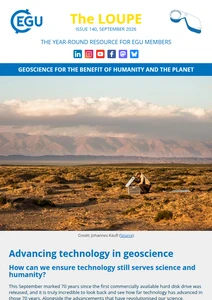
In our September issue, we ask whether our accelerating technological advancement is still serving science (and scientists), and hear from the incoming Early Career Scientist rep for the Geosciences Instrumentation and Data Systems (GI) Division Luigi Bianco. Don't miss your chance to register for one of our autumn workshops the Outreach Committee is seeking a consultant to help develop a mentoring programme.
All this and much more, in this month's Loupe!
Read more
Current issue of the NH division newsletter
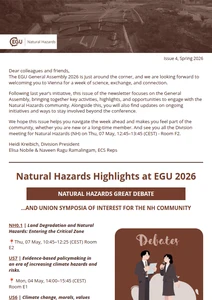
Welcome from the NH Division Team
Dear colleagues and friends,
The EGU General Assembly 2026 is just around the corner, and we are looking forward to welcoming you to Vienna for a week of science, exchange, and connection.
Following last year’s initiative, this issue of the newsletter focuses on the General Assembly, bringing together key activities, highlights, and opportunities to engage with the Natural Hazards community. Alongside this, you will also find updates on ongoing initiatives and ways to stay involved beyond the conference.
We hope this issue helps you navigate the week ahead and makes you feel part of the community, whether you are new or a long-time member. And see you all the Division meeting for Natural Hazards (NH) on Thu, 07 May, 12:45–13:45 (CEST) - Room F2.
Read more