President: Kristen Cook
(Emailgm@egu.eu)
Deputy President: Ronald Pöppl
(Email)
ECS Representative: Romano Clementucci
(Emailecs-gm@egu.eu)
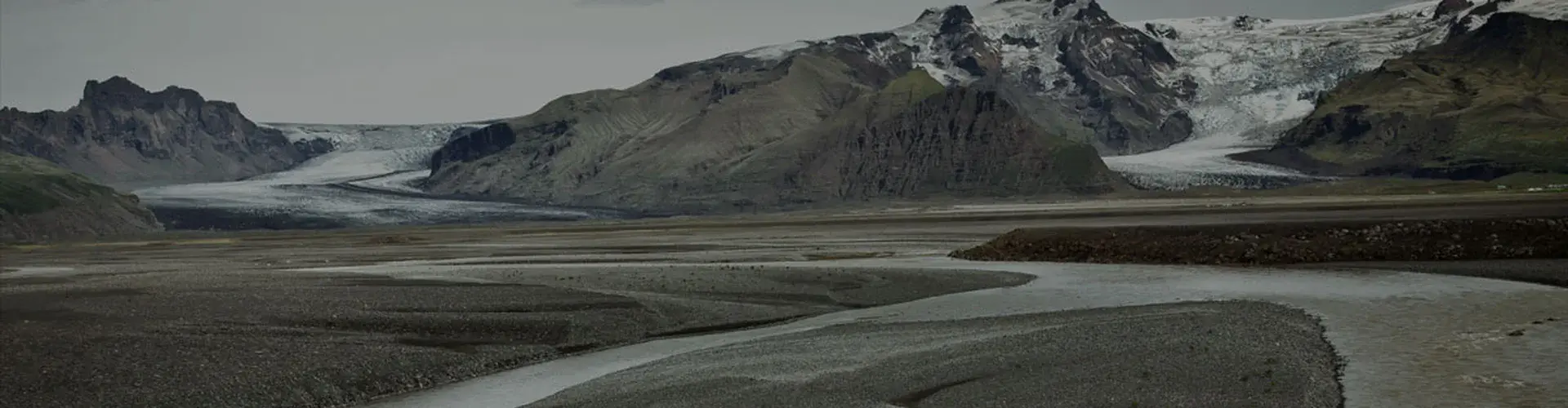
Geomorphology is the scientific study of land-surface features and the dynamic processes that shape them. Besides focusing on the diverse physical landscapes of the Earth, geomorphologists also study surfaces of other planets. Understanding landform history and dynamics, and predicting future changes through a combination of field observations, physical experiments, and numerical modelling is at the heart of geomorphology. The division brings together research on processes that build topography trough e.g. the effects of tectonic forces as well as processes that modify the terrain such as weathering, erosion through running water, waves, glacial ice, wind and gravitational forces. Division members also study the impact of humans on geomorphological processes and investigate how geomorphological knowledge can be applied to solve problems of relevance to societies.
Latest posts from the GM blog
Meet the Snow Dunes of Antarctica
By Marine Poizat, PostDoc at the Geological Survey of Finland. Email: marine.poizat@gtk.fi, website: https://www.gtk.fi/en/experts/poizat-marine/. Antarctica has dunes. And they are made of snow. When people think of deserts, they usually picture vast expanses of sand beneath a blazing sun. Yet Antarctica is also a desert, receiving remarkably little precipitation, especially inland. And like other deserts, Antarctica has dunes… except here, they are made of snow! Although Antarctica is often imagined as a flat, featureless white landscape, a closer look reveals …
Read more
Great Names in Geomorphology A–Z: Ralph Bagnold
Ralph Alger Bagnold (3 April 1896 – 28 May 1990) was a British engineer, geomorphologist, desert explorer, and soldier. His work fundamentally changed our understanding of sediment transport. His pioneering studies of wind-blown sand and desert dunes established a quantitative, physics-based approach to aeolian geomorphology. Bagnold’s scientific career was closely connected with his fascination with deserts. As an officer in the British Army, he spent years in North Africa and used his periods off leave to explore parts of the …
Read more
From Storm to Landscape: High Resolution for Climate Risk
Welcome to ”Climate Change through a Geomorphological Lens”, a blog series exploring the changing climate from a geomorphological perspective. This first post was inspired by a single figure in the Intergovernmental Panel on Climate Change’s Sixth Assessment Report [1]. It compares precipitation change per degree Celsius of warming across different climate models and observations for three time categories: global mean, 24-hour extremes, and sub-1-hour extremes. Figure 1 shows that observed changes per degree of warming are five times greater for …
Read more
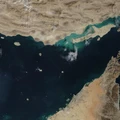
In the News: A Geomorphologists’ perspective on the Strait of Hormuz
Welcome to In the News: A Geomorphologist’s Perspective! The intent of this series is to explore the geology and geomorphology of places that are currently in the news. For this first installment, we’ll do a quick tour of how geological processes have laid the groundwork for current fighting over control of the Strait of Hormuz. The Iran war, and the Strait of Hurmuz, have dominated the news cycle since attacks from the U.S. and Israel began in February. But how …
Read more
Recent awardees

- 2026
- Ralph Alger Bagnold Medal
The 2026 Ralph Alger Bagnold Medal is awarded to
Maarten G. Kleinhans for impactful research in fluvial and coastal biogeomorphology through analog and numerical modeling.
Read more

- 2026
- Division Outstanding Early Career Scientist Award
The 2026 Division Outstanding Early Career Scientist Award is awarded to
Dongfeng Li for outstanding and extensive contributions to our understanding of high mountain and cold region erosional processes, and sediment dynamics.
Read more
- 2025
- Ralph Alger Bagnold Medal
The 2025 Ralph Alger Bagnold Medal is awarded to
Christopher D. Clark for fundamentally advancing the understanding of glacial landscapes, landforms, and geomorphological processes.
Read more

- 2025
- Division Outstanding Early Career Scientist Award
The 2025 Division Outstanding Early Career Scientist Award is awarded to
Jana Eichel for outstanding and innovative work on the feedbacks between plants and geomorphic processes in high mountains.
Read more

- 2025
- Outstanding Student and PhD candidate Presentation (OSPP) Award
The 2025 Outstanding Student and PhD candidate Presentation (OSPP) Award is awarded to
Jil van Etten Periglacial puzzles: Unravelling environmental controls on solifluction lobe morphometry
Read more

- 2025
- Outstanding Student and PhD candidate Presentation (OSPP) Award
The 2025 Outstanding Student and PhD candidate Presentation (OSPP) Award is awarded to
Jonah McLeod Planform as a Dominant Control on Sediment Intermittency: Global Analysis of River Transport Patterns
Read more

- 2025
- Outstanding Student and PhD candidate Presentation (OSPP) Award
The 2025 Outstanding Student and PhD candidate Presentation (OSPP) Award is awarded to
Leona Repnik Historical photogrammetry for DoDs in deglaciating environments: challenges and opportunities
Read more
Current issue of the EGU newsletter
In our September issue, we ask whether our accelerating technological advancement is still serving science (and scientists), and hear from the incoming Early Career Scientist rep for the Geosciences Instrumentation and Data Systems (GI) Division Luigi Bianco. Don't miss your chance to register for one of our autumn workshops the Outreach Committee is seeking a consultant to help develop a mentoring programme.
All this and much more, in this month's Loupe!
Read more