President: Roelof Rietbroek
(Emailg@egu.eu)
Deputy President: Anna Klos
(Email)
ECS Representative: Marius Schlaak
(Emailecs-g@egu.eu)
Traditionally geodesy is the science of the measurement and the mapping of the Earth’s surface. Since the surface is mainly shaped by the Earth’s gravity field the classical definition includes the Earth’s gravitational potential. Observing the Earth's figure, the orientation and rotation as well as the gravity field, geodesy today provides spatial and temporal patterns of geophysical processes within the Earth system such as sea-level rise, tides, melting of continental ice masses, changes in global water circulation and in the atmosphere or deformations of the solid Earth. Consequently, the Geodesy Division covers activities on the whole spectrum of modern geodetic Earth system modelling from the measurement systems to the investigation of geophysical processes.
Latest posts from the G blog
Regional Reference Frames: Keeping Track of a Deforming Earth
You are observing the construction of a bridge that will be initiated on the two banks of a river simultaneously, in such a way that the works will eventually meet in the middle of the river. You wonder, how do they make sure that the construction on the two sides will stay aligned with the millimeter precision that this project requires? You are aware of previous constructions where small miscalculations led to embarrassing results, such as the Laufenburg bridge between …
Read more
EGU Campfire Geodesy – Share Your Research – 22nd Edition
We are excited to announce the 22nd edition of Geodesy Campfire – Share Your Research in September. The Geodesy EGU Campfire Events “Share Your Research” give (early career) researchers the chance to talk about their work. We have two exciting talks by our guest speakers, Brian Bramanto and Arash Tayfehrostami. Below, you can find the details of the topics awaiting us. We will have time to network after the presentations. Please join us on Zoom on 17th September 2026 from …
Read more
Tidal pulse of rivers
The research gap Ocean tides play a significant role on ocean circulation, coastal processes and mass variations. Tides are generated from the gravitational interaction between Earth, Moon and Sun, which typically results in two high and two low tides observed each day. Satellite observations have vastly expanded our understanding of ocean tides. In 2022, the Surface Water and Ocean Topography (SWOT) satellite was launched, funded by CNES and NASA, and provided a new perspective on the ocean surface and inland …
Read more
EGU Campfire Geodesy – Share Your Research – 21st Edition
We are excited to announce the 21st edition of Geodesy Campfire – Share Your Research in August. The Geodesy EGU Campfire Events “Share Your Research” give (early career) researchers the chance to talk about their work. We have two exciting talks by our guest speakers, Shrishail Raut and Michal Cuadrat-Grzybowski. Below, you can find the details of the topics awaiting us. We will have time to network after the presentations. Please join us on Zoom on 20st August 2026 from …
Read more
Recent awardees
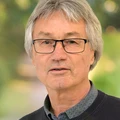
- 2026
- Vening Meinesz Medal
The 2026 Vening Meinesz Medal is awarded to
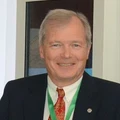
Frank Flechtner for innovative work in gravity field determination and exceptional contributions to the realisation of pivotal satellite gravity missions.
Read more
- 2026
- Division Outstanding Early Career Scientist Award
The 2026 Division Outstanding Early Career Scientist Award is awarded to
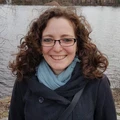
Eva Boergens for outstanding work on addressing contemporary hydrological challenges using satellite geodesy.
Read more
- 2025
- Vening Meinesz Medal
The 2025 Vening Meinesz Medal is awarded to
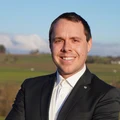
René Forsberg for significant and impactful advancements in geodesy, geophysics, and cryosphere research, and for pioneering work, particularly in gravity field modelling and geoid determination.
Read more
- 2025
- Division Outstanding Early Career Scientist Award
The 2025 Division Outstanding Early Career Scientist Award is awarded to
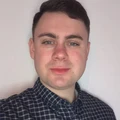
Matthias Schartner for commendable efforts to modernize one of the fundamental pillars of geodesy – Very Long Baseline Interferometry (VLBI).
Read more
- 2025
- Outstanding Student and PhD candidate Presentation (OSPP) Award
The 2025 Outstanding Student and PhD candidate Presentation (OSPP) Award is awarded to
Marcel Iten Ionospheric data fusion with GNSS, GNSS-RO and satellite altimetry based on machine learning
Read more
Current issue of the EGU newsletter
In our August issue, we reflect on the lessons learned from past disasters associated with natural hazards, and hear from the Early Career Scientist rep for the Natural Hazards Division Elisa Nobile. Don't miss your chance to register for one of our six autumn workshops and applications are open to volunteer with the Outreach Committee. The call for sessions for EGU27 is open and don't miss your chance to nominate someone to be the Union's next Early Career Scientist (ECS) Union-wide Representative or Treasurer!
All this and much more, in this month's Loupe!
Read more