President: Alice-Agnes Gabriel
(Emailsm@egu.eu)
Deputy President: Philippe Jousset
(Email)
ECS Representative: Ana Nap
(Emailecs-sm@egu.eu)
Seismology as a discipline contributes to a large variety of both basic and applied scientific fields, and addresses urgent questions in the context of both natural resources and natural hazards. The Seismology (SM) Division at EGU aims to strengthen its interdisciplinarity and impact by driving the development from static to dynamic geophysical models, by conducting research that spans from acquisition parameters to petrophysical properties, and by supporting the transition from geo-modelling to geo-technical application. Thereby, the SM Division will be increasingly able to make relevant forecasts and provide valuable information to tackle future challenges in securing natural resources and quantifying natural hazards.
The EGU offers an open and widely recognized forum for discussing a wide range of scientific questions and conducting corresponding research. The impact of geosciences to society has probably never been as high as today. Therefore, we pursue broad and open-minded approaches to tackle important research topics, while simultaneously engaging in interdisciplinary collaborations for the benefit of humanity and our planet.
Get involved!
Follow us on Facebook and our Seismoblog!
Sign up for the (low traffic) seismo-Email list.
For current medal and award committees please see Awards & medals committees page.
Latest posts from the SM blog

“State of the ECS”: EGU 26 and, our new members!
For this “State of the ECS”, our Seismo-team will introduce themselves and tell about their ECS experience. Happy reading! Greetings! I’m Adam and by a twist in the timestream in Vienna in 2024 I ended up as the Editor-in-Chief of a blog of the Seismology ECS division (yes, this one). If your (or your colleague’s) research touches on any aspect of Seismology or related fields, please reach out! My background is diverse, from Astronomy (Accretion disks, Relativistic jets and close …
Read more
Could the Chilean Altiplano host natural hydrogen for the energy transition?
The contribution from Sergio León-Ríos, Associate Researcher at the Advanced Mining Technology Center (AMTC) at the University of Chile, where he does seismology research. Post edited by Adam Ciesielski prior to publication. Introduction Hydrogen sits at the heart of today’s energy transition. From policy documents to industry roadmaps, it is widely promoted as a clean alternative to fossil fuels. But while most discussions focus on how to produce hydrogen, geoscientists are increasingly asking a different question: what if some hydrogen …
Read more
Seismology Division Events for EGU26 General Assembly
Hello all you Seismologists, eager to get together at EGU26! We are now getting very close to the next EGU General Assembly, and of course we are looking forward to reconnecting with all of you at EGU26. In this blog post, we would like to summarise many of the events that are organised by the Seismology Division and ECS Representatives of the Seismology Division during EGU26. Grab your calendar, and make sure to come and meet us on many of …
Read more
Recent awardees
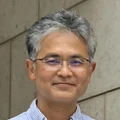
- 2026
- Beno Gutenberg Medal
The 2026 Beno Gutenberg Medal is awarded to
Satoshi Ide for pioneering work on the physical foundations of tectonic tremor, low-frequency and slow earthquakes, and for developing new observational methods to characterize them.
Read more
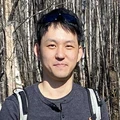
- 2026
- Division Outstanding Early Career Scientist Award
The 2026 Division Outstanding Early Career Scientist Award is awarded to
Kurama Okubo for outstanding contributions to earthquake physics that integrate numerical modelling, observational seismology, and laboratory experiments, to illuminate complex rupture dynamics and fault mechanics.
Read more

- 2025
- Division Outstanding Early Career Scientist Award
The 2025 Division Outstanding Early Career Scientist Award is awarded to
Brandon Paul VanderBeek for major achievements in seismic imaging of the Earth's interior, and geodynamic interpretation of its complex isotropic and anisotropic structure.
Read more

- 2025
- Outstanding Student and PhD candidate Presentation (OSPP) Award
The 2025 Outstanding Student and PhD candidate Presentation (OSPP) Award is awarded to
Aurora Lambiase Induced fault slip events and their deformation fields: insights from FEAR experiments
Read more

- 2025
- Outstanding Student and PhD candidate Presentation (OSPP) Award
The 2025 Outstanding Student and PhD candidate Presentation (OSPP) Award is awarded to
Clara Vernet Shallow crustal imaging with distributed acoustic sensing (DAS) offshore central Chile
Read more
Current issue of the EGU newsletter
In our September issue, we ask whether our accelerating technological advancement is still serving science (and scientists), and hear from the incoming Early Career Scientist rep for the Geosciences Instrumentation and Data Systems (GI) Division Luigi Bianco. Don't miss your chance to register for one of our autumn workshops the Outreach Committee is seeking a consultant to help develop a mentoring programme.
All this and much more, in this month's Loupe!
Read more