President: João C. Duarte
(Emailts@egu.eu)
Deputy President: Paola Vannucchi
(Email)
ECS Representative: Hannah Sophia Davies
(Emailecs-ts@egu.eu)
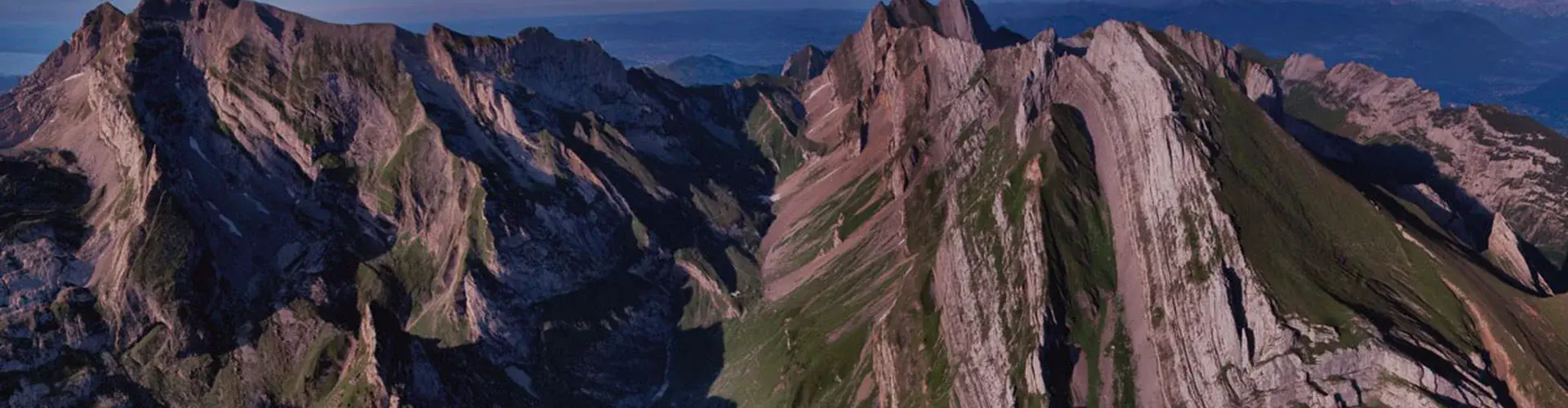
The Division on Tectonics and Structural Geology (TS) investigates rock deformation at all scales with the aim to decipher its complex relationships with Earth dynamics. We use natural observations, including mapping, remote sensing and seismics, and experimental methods. The division is highly interdisciplinary, with strong ties with other EGU divisions including GD, EMRP, SM, SSP, GM, G, and GMPV.
Latest posts from the TS blog
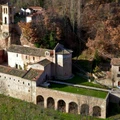
Geomythology. Neotectonics and Monasticism
With today’s post, I would like to temporarily leave (geo)myths behind and enter (geo)history. I was first introduced to the following historical account by Professor Francesco Brozzetti of the University of Chieti (Italy), whose extensive knowledge of the Apennines of Central Italy extends well beyond geology. Geological Origins of Monasticism This is the brief history of how monasticism spread through the occidental world from a small deposit of Pietra Sponga, whose natural caves formed near the village of Preci, in …
Read more

Join the team! The TS division is looking for new volunteers
Hello there! Welcome to the TS-Blog! I’m Pauline, editor in chief. If you’re reading this, you’re probably already intrigued by our announcement and might wonder: What is it like being a blog editor? Or simply: What if the next editor of a post was… ME? Well, let me tell you more about being an editor. Because our editor team is looking for new members to bring in their perspective and give visibility to people, topics, concerns. Yes, we are the …
Read more
TS division at EGU26 and beyond
With the EGU General Assembly 26 approaching, now is the time to review the division’s activities! Thanks to the efforts of all the conveners, and the division officers the scientific programme of our division is once again very rich and reflects the evolution of the field. Sessions The sessions are organised into nine blocks: TS1 – Deformation Mechanisms, Rheology, and Rock-Fluid Interactions TS2 – Tectonics of Plate Boundaries: From Rifting to Orogenesis TS3 – Active Tectonics, Seismicity, Kinematics, and Dynamics …
Read more
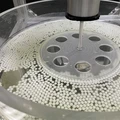
Exploring Earth’s interior with analogue models: The case of slow earthquakes
Have you ever heard of “analogue modelling”? In solid Earth science, directly observing the Earth’s interior is challenging, and the analogue modelling approach often overcomes this limitation by using alternative systems analogous to natural phenomena. By identifying fundamental mechanisms in these tractable systems, we can apply physical scaling laws to understand processes deep within the Earth. This broad concept encompasses not only laboratory experiments but also numerical models and even geological studies. In this post, we explore how analogue modelling …
Read more
Recent awardees

The 2026 Marie Tharp Medal is awarded to
Christian Teyssier in light of profound and lasting contributions to the field, dedication to advancing geoscience, and commitment to mentoring the next generation of scientists.
Read more

- 2026
- Division Outstanding Early Career Scientist Award
The 2026 Division Outstanding Early Career Scientist Award is awarded to
Luca Dal Zilio for fundamental contribution to understanding how deformation localises across time-scales, using cutting-edge research at the intersection of tectonics, geodynamics, and earthquake physics.
Read more

- 2025
- Stephan Mueller Medal
The 2025 Stephan Mueller Medal is awarded to
Heidrun Kopp for innovative research and groundbreaking discoveries in convergent margin systems, large earthquake processes, active fault slip, magmatic arc systems and geohazards.
Read more

- 2025
- Outstanding Student and PhD candidate Presentation (OSPP) Award
The 2025 Outstanding Student and PhD candidate Presentation (OSPP) Award is awarded to
Isabel Wapenhans Can Low-Temperature Thermochronology Constrain Quaternary Glacial Erosion? A Case Study from the Tauern Window, Eastern European Alps
Read more

- 2025
- Outstanding Student and PhD candidate Presentation (OSPP) Award
The 2025 Outstanding Student and PhD candidate Presentation (OSPP) Award is awarded to
Iván Navarrete Inter-event strain localization modulated by background stresses across the Natron Basin, East African Rift
Read more

- 2025
- Arne Richter Award for Outstanding Early Career Scientists
The 2025 Arne Richter Award for Outstanding Early Career Scientists is awarded to
Renelle Dubosq for pioneering nanogeology research, advancing our understanding of plastic deformation in minerals, using innovative 2D and 3D analytical techniques in tectonics and structural geology.
Read more
Current issue of the EGU newsletter
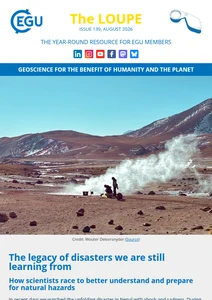
In our August issue, we reflect on the lessons learned from past disasters associated with natural hazards, and hear from the Early Career Scientist rep for the Natural Hazards Division Elisa Nobile. Don't miss your chance to register for one of our six autumn workshops and applications are open to volunteer with the Outreach Committee. The call for sessions for EGU27 is open and don't miss your chance to nominate someone to be the Union's next Early Career Scientist (ECS) Union-wide Representative or Treasurer!
All this and much more, in this month's Loupe!
Read more