President: Kerstin Treydte
(Emailcl@egu.eu)
Deputy President: Gabriele Messori
(Email)
ECS Representative: Shalenys Bedoya Valestt
(Emailecs-cl@egu.eu)
The Division on Climate: Past, Present & Future (CL) is one of the larger divisions of the European Geosciences Union. It pools from many disciplines and consequently has many co-organised sessions with other divisions at the EGU General Assembly. The division is very interdisciplinary and covers climate variations on all time scales. CL includes the study of any kind of climate archive from rocks to ocean cores, speleothems, ice cores, chronicles, to instrumental records to name a few. Besides observations, climate modelling on all time scales from the deep past to the future are areas covered by the division. Any aspect of the climate system falls into the realm of the division e.g. atmosphere, ocean, biosphere, cryosphere, and geology. Themes focus on the climate on Earth but may also expand other planets or the Sun.
Latest posts from the CL blog
Studying societal climate impacts: why is it hard and what can we do about it
Due to the rapid rise in temperatures, it started raining on the snow and ice-covered roads, prompting the regional public transport operator to suspend all bus services. The rain also resulted in icing on the overhead lines of the main railway line coming into town. Rail traffic was also temporarily suspended. Before the adjacent highway could be salted, several tens of cars were involved in a chain-reaction crash. It took several hours before the highway could be reopened. With no …
Read more
CYCLIM: cycle counting a faster way
As we try to predict what will happen under increasing anthropogenic climate change, climate models can only get us so far. Another key is understanding past changes in the Earth’s climate. To do this, palaeoclimatologists turn to natural archives (e.g., sediment cores and speleothems) and extract records of past variability using their properties, such as chemical or physical composition. However, these reconstructions are only as accurate as their chronologies. While radiometric dating is the most common technique, some archives can …
Read more

Türkiye’s Climate at a Crossroads
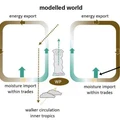
Climate change is often described as a challenge of the future. Yet through our latest work, we’ve realized the future is already unfolding across Türkiye’s landscapes and climates. The signs are visible in the shifting seasons, intensifying heatwaves, and changes in rainfall… As one of the authors of the study “High-Resolution Projections of Bioclimatic Variables in Türkiye: Emerging Patterns and Temporal Shifts” led by Prof. Ünal, I would like to share with you what we found and why it matters. …
Read more
Recent awardees
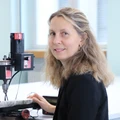
The 2025 Hans Oeschger Medal is awarded to
Heather Marie Stoll for pioneering contributions in both marine and terrestrial palaeoclimate research, which led to groundbreaking advancement in our understanding of rapid climate change, through forcings and feedbacks.
Read more

- 2025
- Milutin Milanković Medal
The 2025 Milutin Milanković Medal is awarded to
Zhengyu Liu for outstanding contributions to our understanding of global climate change by combining theoretical approaches, the development and use of a hierarchy of models, and model-data comparisons.
Read more

- 2025
- Division Outstanding Early Career Scientist Award
The 2025 Division Outstanding Early Career Scientist Award is awarded to
Kai Kornhuber for outstanding research on extreme weather and climate dynamics, including circumglobal patterns in the jet stream, their relation to heatwaves and food security, and representation in climate models.
Read more

- 2025
- Outstanding Student and PhD candidate Presentation (OSPP) Award
The 2025 Outstanding Student and PhD candidate Presentation (OSPP) Award is awarded to
Devika Moovidathu Vasudevan Upper Tropospheric Humidity and Cloud Radiative Forcing: A Tropical Perspective
Read more

- 2025
- Outstanding Student and PhD candidate Presentation (OSPP) Award
The 2025 Outstanding Student and PhD candidate Presentation (OSPP) Award is awarded to
Lison Soussaintjean Towards understanding the N2O production in dust-rich Antarctic ice
Read more
- 2025
- Outstanding Student and PhD candidate Presentation (OSPP) Award
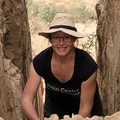
The 2025 Outstanding Student and PhD candidate Presentation (OSPP) Award is awarded to
Ramona Schneider Magnetic fabric of Tajik loess-palaeosols as a palaeowind and process indicator
Read more

- 2025
- Outstanding Student and PhD candidate Presentation (OSPP) Award
The 2025 Outstanding Student and PhD candidate Presentation (OSPP) Award is awarded to
Tatiana Bebchuk Subfossil yew (Taxus baccata) wood from eastern England reveals mid-Holocene climate and environmental changes
Read more
Current issue of the EGU newsletter
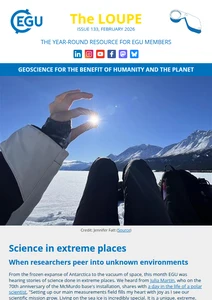
In our February issue, we are following pioneering scientists into extreme places in the name of discovery, from a day-in-the-life of an Antarctic researcher working on the sea ice to how the Viking spaceships took space plasma from theory to observation. Marie Cavitte shares her experience of the Blue Book traineeship in science for policy and Elsa Abs talks about their work with soil microbes. EGU's President thanks our 12,000 volunteers from 2025 and we share the 24 training schools and member-organised meetings we have funded in 2026. Deadlines approach for the EGU26 photo competition and Early-bird registration fees, and there is a job vacancy in the EGU Executive office in Munich, Germany!
All this and much more, in this month's Loupe!
Read more