President: Joanna Staneva
(Emailos@egu.eu)
Deputy President: Sandro Carniel
(Email)
ECS Representative: Arianna Olivelli
(Emailecs-os@egu.eu)
The Ocean Sciences (OS) Division has the major objective to provide an attractive and productive environment for scientists from Europe and all over the world to gain progress in the various ocean science disciplines and have beneficial interactions with other fields of geosciences. For that purpose, we organise with the teams of conveners the ocean science part of the program of the scientific conference that his held every year during the EGU General Assembly. We give special attention to topics cross-cutting with those of other divisions. We recognise deserving colleagues in various stages of their careers with our Award program: the division awards the Fritdjof Nansen Medal to mid or full career scientists and the Outstanding Early Career Scientists Award for researchers in the early stages of their careers. We also award prizes to outstanding student posters at every General Assembly. The division maintains very strong links with the EGU Publications Committee, and especially with the board of editors of the open access journal Ocean Science (OS). The division also collaborates with other EGU committees in the organisation of relevant topical conferences and summer schools.
Latest posts from the OS blog
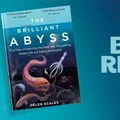
Book Review: The Brilliant Abyss by Helen Scales
Looking for your next read? 📚 Our previous book recommendations took us through ocean physics in Blue Machine – How the Ocean Shapes Our World, bioluminescence and deep-sea exploration in Below the Edge of Darkness, and ocean-inspired science fiction in The Swarm. Most recently, we ventured beyond the ocean with Invisible Women, exploring data bias […]
Read more
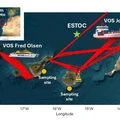
An archipelago as a natural laboratory: Pioneering ocean monitoring network in the Canary Islands
The Canary Islands are often shown as a group of small dots in the vast Atlantic Ocean. However, across only a few tens of kilometres, their surrounding waters can shift from sheltered coastal bays and energetic inter-island channels to the open subtropical ocean. This strong environmental contrast makes the archipelago an ideal natural laboratory for observing how the ocean varies and responds to a changing climate. At the same time, the islands are home to communities whose lives and livelihoods …
Read more
Looks can be deceiving: Why high coral cover does not always mean high reef productivity
When most people imagine a coral reef, they picture clear, warm, sunny tropical waters. However, the coral communities of Hong Kong live in a vastly different setting. In the shadows of one of the most densely populated coastlines in the world, these corals persist under highly turbid conditions, receiving relatively little light over the year. Water conditions are also highly seasonal, with large changes in temperature, rainfall and nutrient loads between the wet and dry seasons. These environmental conditions are …
Read more

Book Review: Invisible Women by Caroline Criado Perez
Our previous book recommendations were the nonfiction books Blue Machine – How the Ocean Shapes our World by Helen Czerski and Below the Edge of Darkness by Edith Widder as well as the thriller The Swarm by Frank Schätzing. This time, we are stepping away from the ocean. Our next book recommendation is “Invisible Women: Exposing Data Bias in a World Designed by Men” by Caroline Criado Perez, a nonfiction book published in 2019. While it is not an ocean-themed …
Read more
Recent awardees

- 2026
- Division Outstanding Early Career Scientist Award
The 2026 Division Outstanding Early Career Scientist Award is awarded to
Tillys Petit for outstanding contributions to understanding the ocean processes that regulate the Atlantic overturning circulation, combining observations and modelling to advance climate research.
Read more

- 2025
- Fridtjof Nansen Medal
The 2025 Fridtjof Nansen Medal is awarded to
Tatiana Ilyina for distinguished research in oceanography to enhance our understanding of the ocean carbon cycle and its critical role in the climate system.
Read more

- 2025
- Division Outstanding Early Career Scientist Award
The 2025 Division Outstanding Early Career Scientist Award is awarded to
Jens Terhaar for outstanding research on the biogeochemistry of the ocean carbon cycle and its feedbacks on climate.
Read more

- 2025
- Outstanding Student and PhD candidate Presentation (OSPP) Award
The 2025 Outstanding Student and PhD candidate Presentation (OSPP) Award is awarded to
Estel Font Arabian Sea Mode Water: A Key Player in Surface-to-Interior Exchange
Read more
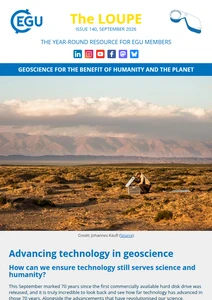
Current issue of the EGU newsletter
In our September issue, we ask whether our accelerating technological advancement is still serving science (and scientists), and hear from the incoming Early Career Scientist rep for the Geosciences Instrumentation and Data Systems (GI) Division Luigi Bianco. Don't miss your chance to register for one of our autumn workshops the Outreach Committee is seeking a consultant to help develop a mentoring programme.
All this and much more, in this month's Loupe!
Read more
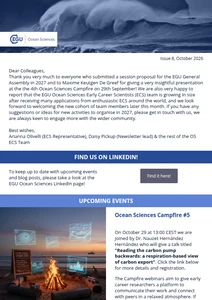
Current issue of the OS division newsletter
Highlights from the EGU Ocean Sciences Division
Read more