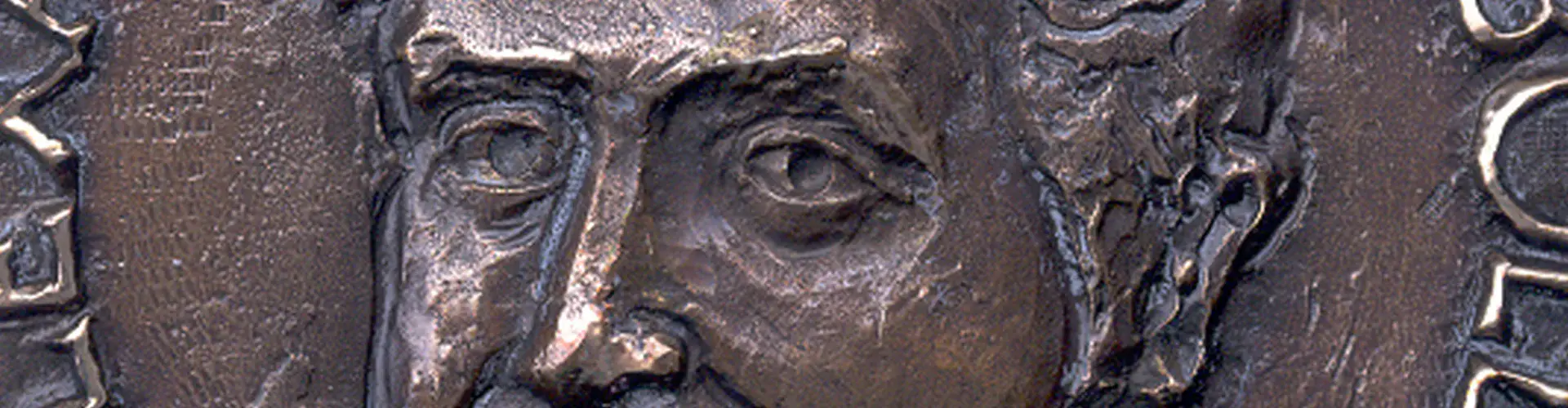

Walter W. Immerzeel

The 2026 Alexander von Humboldt Medal is awarded to Walter W. Immerzeel for outstanding and societally relevant research in the field of glacio-hydrological science in the Himalayas, combining field work with advanced remote sensing techniques and numerical modeling.
Walter Immerseel’s career is absolutely remarkable for combining teaching, mainly at the University of Utrecht, and innovative field work with interpretation based on specifically developed numerical models.
Immerseel's main research has specifically targeted the Himalayas, with an innovative topic of mountain hydrology of the Himalayas (the water tower of south/south-east Asia) quite important for developing countries in that region. Not only has he organised many research expeditions in the Himalayas, he also moved to Nepal for two years in dedication to his research. He was attached to the International Centre for Integrated Mountain Development where he collaborated with local scientists, policy makers, teachers and students. He worked in contact with scientists not only from Nepal, but also from India, China, Bhutan, and Myanmar. Currently, he is still a guest researcher in this Institute.
His innovative field methods include the first use of drones to understand glacier dynamics, and to quantify the impact of climate change on mountain water resources. As a result of this innovation, he obtained, and described in his high impact 2010 publication in Science, the first large scale picture of glacier and snow contribution to river runoff in High Mountain Asia (HMA) and how this will change in a changing climate. He has been a pioneer in terms of both methods applied and results obtained.