
Bettina Weber
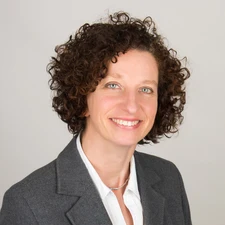
The 2026 Alina Kabata-Pendias Medal is awarded to Bettina Weber for pioneering, interdisciplinary contributions to understanding cryptogamic communities and biocrusts, and their role in biogeochemical cycles, particularly in nitrogen cycle.
Bettina Weber is internationally renowned for her cutting-edge research on biological soil crusts and cryptogamic communities (lichens, algae, cyanobacteria, ferns and mosses) that grow on soil, rock, and also tree bark. Her work led to the creation of the first global biocrust distribution map, which revealed that biocrusts cover about 12% of Earth's land surface, projecting their vulnerability under global change. Her achievements help to understand the functional roles and diversity of cryptogamic communities in relation to both existing environmental conditions and global change.
Her interdisciplinary work fuses ecology, modelling, and remote sensing to quantify cryptogamic contributions to climate feedbacks, dust suppression, and gas fluxes, influencing Earth System science. With over 10,500 citations across more than a hundred peer-reviewed journal publications (quarter of them in very high-impact journals), Weber has made a significant impact on Earth and Soil System science.
Weber has led research groups in Germany and Austria, and now leads the 'Functional Diversity and Ecology' group at Karl-Franzens University in Graz. As an academic teacher and mentor, she has inspired numerous students and researchers, and she was clearly a role model for young women scientists. She is regularly invited for keynote talks across Europe and Australia and has been a regular convener at the EGU General Assembly. Her transformative scientific contributions, interdisciplinary approach, and dedication to mentorship have earned her numerous awards, including the Nobel Laureate Paul Crutzen stipend (2013-2015). She continues to shape research on biocrusts and cryptogamic communities, with a lasting influence on global environmental science. For these reasons, she is a worthy recipient of this year’s Alina Kabata-Pendias Medal.