

Sally E. Thompson
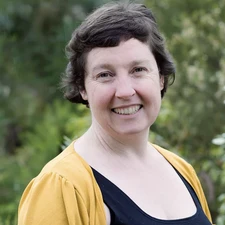
The 2026 Henry Darcy Medal is awarded to Sally E. Thompson for outstanding contributions to ecohydrology, particularly the co-evolution of vegetation and soils in natural landscapes, and the emerging patterns in response to water limitation.
Sally E. Thompson’s research has pushed boundaries of our global understanding of cross-scale interactions between physical processes, vegetation and soils, and how this can lead to the emergence of novel patterns and spatial organisation in nature. Thompson’s work is characterised by an exceptionally rich theoretical analyses as a basis for understanding physical and biological interactions in catchments. She is a strong advocate to frame fundamental research challenges as being use-inspired. This has enabled her to articulate specific barriers to effective uptake of catchment science for water management and advocate for ways in which theoretical work on catchment evolution can translate to better management.
Thompson has a particular talent for making complex things seem simple, and this has led to deep engagement with stakeholders, and being able to effectively bridge between local water manager needs, whilst honouring the underlying big-picture research questions. This approach has allowed her to develop and contribute to major societal challenges, including but not limited to deforestation-climate feedbacks across the Maritime Continent and Brazil, water policy in India and Western Australia, and soil and water conservation in the Ethiopian Highlands. Across all these efforts, Thompson has built strong partnerships with non-governmental organizations, universities, governments, and local communities, which testifies to her versatility, humility, and capacity to work effectively across disciplines, cultures, and development contexts. Her research is not only about understanding systems; it is about improving them for the benefit of people and ecosystems.
In addition to her scientific achievements and service to the community, Thompson has also been enthusiastically engaged in supervision, mentoring, teaching, and science dissemination, with a strong concern for equity and structural solutions for the Global South.