
Giovanni Chiodini
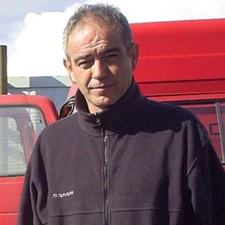
The 2026 Robert Wilhelm Bunsen Medal is awarded to Giovanni Chiodini for influential and transformative work in volcanology and gas geochemistry to elucidate Earth’s degassing processes, and long-lasting contributions to global volcano monitoring.
Giovanni Chiodini has made groundbreaking contributions to volcanology, remarkably, without the traditional career directions and university base. His contributions cross multiple dimensions in volcanology. Chiodini is a world-recognized expert in gas analysis, paralleling the legacy of Robert Bunsen, through his work in theoretical chemistry, laboratory-based studies, instrumentation development, and field measurements in volcanic systems. Chiodini's visionary work targeted the societal issues of atmospheric chemistry, geothermal energy, volcanic hazards, and the temperature, pressure, and permeability structure of Earth’s crust. His innovative research has impacted gas, water, and rock interactions, establishing him as a pivotal figure not only in volcanology, but also in petrology and geochemistry. Notable contributions include pioneering methods for estimating thermodynamic properties of geothermal reservoirs, leading to widely adopted practices in gas geochemistry. He played a crucial role in advancing volcano monitoring techniques through his development and broad deployment of instrumentation for quantifying CO2 emissions, discovering significant CO2 discharge zones throughout Italy.
Particularly noteworthy is Chiodini’s holistic depiction of volcanic systems. His long-term gas analysis at the Campi Flegrei Caldera revealed critical correlations between gas chemistry and volcanic activity, allowing calibration of numerical models for magma intrusion and hydrothermal flow. Volcanic gas chemistry as a fundamental monitoring tool for calderas and hydrothermal systems is Chiodini’s legacy. Additionally, his groundbreaking work on CO2 degassing in non-volcanic regions has linked gas emissions to seismicity, providing essential data for assessing earthquake risks. His intuition regarding diffuse CO2 degassing not only established a new research field, but contributed to estimates for global earth carbon degassing, with far-reaching implications for global volatile cycles and evolution of Earth’s geochemical reservoirs. Chiodini’s field methods have contributed to critical analysis of climate change, as his instruments established the CO2 flux between Earth’s crust and atmosphere on a global scale. Throughout his career, Chiodini has published extensively, with a strong citation impact, an impressive achievement considering that his career danced on the fringes of the academic world. After his MSc, Chiodini was hired at L’Istituto Nazionale di Geofisica e Vulcanologia (INGV), the institution in charge of natural hazard monitoring in Italy, especially that of active volcanoes. Here his greatest contributions to global volcano monitoring arose from his new instrumentation, method development, and fundamental data. In a sense, Chiodini’s noteworthy scientific achievements are but a by-product of a lifelong career of service to the global community.
Beyond his inventions and research achievements, Chiodini’s leadership in the field, coupled with his roles as mentor and editor, underscores his commitment to advancing scientific knowledge. The extent of his work with Early Career volcanologists is remarkable for a researcher working outside the traditional academic realm. Even after retirement, his influence remains strong, with his work continuing to be widely cited. In summary, Giovanni Chiodini’s unmatched scientific contributions, which merge invention with application, make him an outstanding awardee for the 2026 Bunsen Medal. He clearly embodies the spirit of this eminent award.