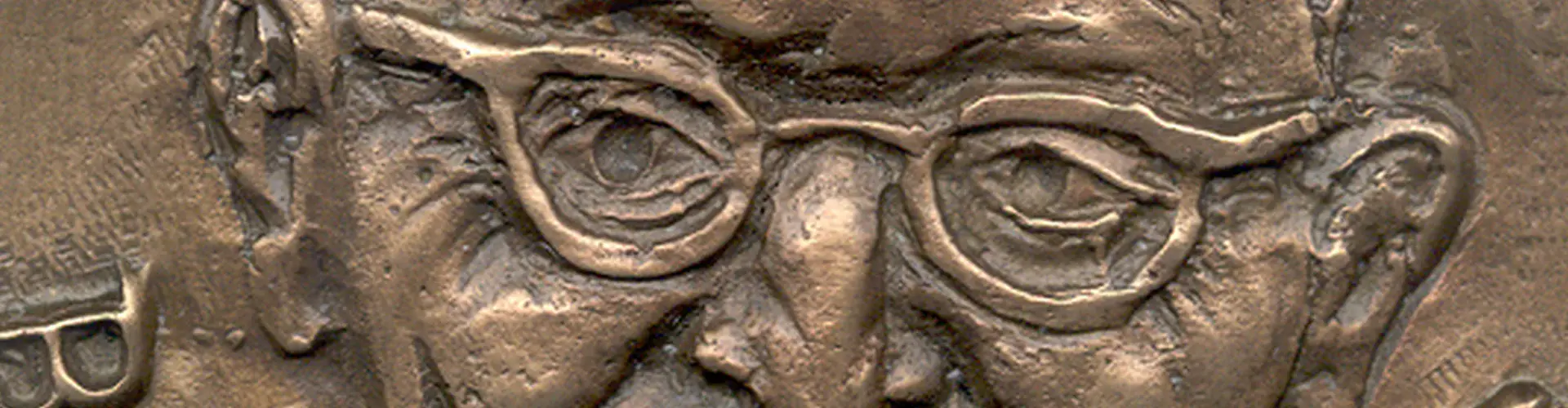

Satoshi Ide
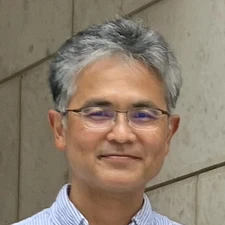
The 2026 Beno Gutenberg Medal is awarded to Satoshi Ide for pioneering work on the physical foundations of tectonic tremor, low-frequency and slow earthquakes, and for developing new observational methods to characterize them.
Ide is an exceptionally distinguished seismologist who has made outstanding contributions to the understanding of earthquake mechanics, particularly through combining seismic and geodetic observations. He has performed groundbreaking work that established the physical foundations of tectonic tremor, low-frequency earthquakes and slow earthquakes, and in doing so reshaped our understanding of earthquake mechanics. This work includes the development of key observational strategies that have significantly advanced our ability to characterize these seismic phenomena.
His notable achievements include his work on slow slip, as well as development of a moment-duration scaling law connecting slow and fast earthquakes. He has helped explain how faults slip silently and the implications of slow slip for larger earthquakes. He has also made important contributions to the study of complex rupture dynamics, tremor migration and triggering, as well as understanding earthquakes as a multi-scale stochastic process. Collectively his work has far reaching implications for seismic hazard assessment and earthquake forecasting. His 2007 Nature paper on moment-duration scaling was a paradigm-shifting contribution, demonstrating that a continuum of slip behaviours exist on faults. This insight challenged traditional classifications and provided a basis for interpreting slow earthquakes across diverse tectonic settings. Ide's research directly explains how faults can slip silently and explores the implications of this 'slow slip' for triggering larger, more catastrophic earthquakes. He established that tectonic tremor, once an obscure seismic signal, consists of a swarm of thousands of small, slow earthquakes that occur as shear slip. This discovery overturned previous models and revolutionized tremor studies, inspiring a new generation of research into their statistics, geometry, and geography.
A notable achievement is Ide’s study of the 2011 Tohoku-Oki earthquake. He was among the first to show that the rupture extended all the way to the trench, a surprising finding that subsequent studies confirmed. This discovery revealed that dynamic processes in the hanging wall can drive slip in areas previously thought to be stable, a crucial insight for assessing tsunamigenic risk in subduction zones worldwide. Ide also advanced the hierarchical rupture model, demonstrating that while earthquakes may appear smooth at large scales, they consist of complex, cascading sub-events at finer resolutions.
Beyond his individual research, Ide has demonstrated exceptional leadership in the geophysics community. He has actively worked to unite seismic and geodetic researchers, most notably by leading the "Science of Slow-to-Fast Earthquakes" project in Japan, which fosters collaboration among dozens of institutions. He further extends his influence through international conferences and workshops, mentoring young scientists and building a global community dedicated to understanding earthquake phenomena. His ability to integrate diverse data streams and his rigorous, visionary approach make him a truly exceptional and deserving candidate for this prestigious award.