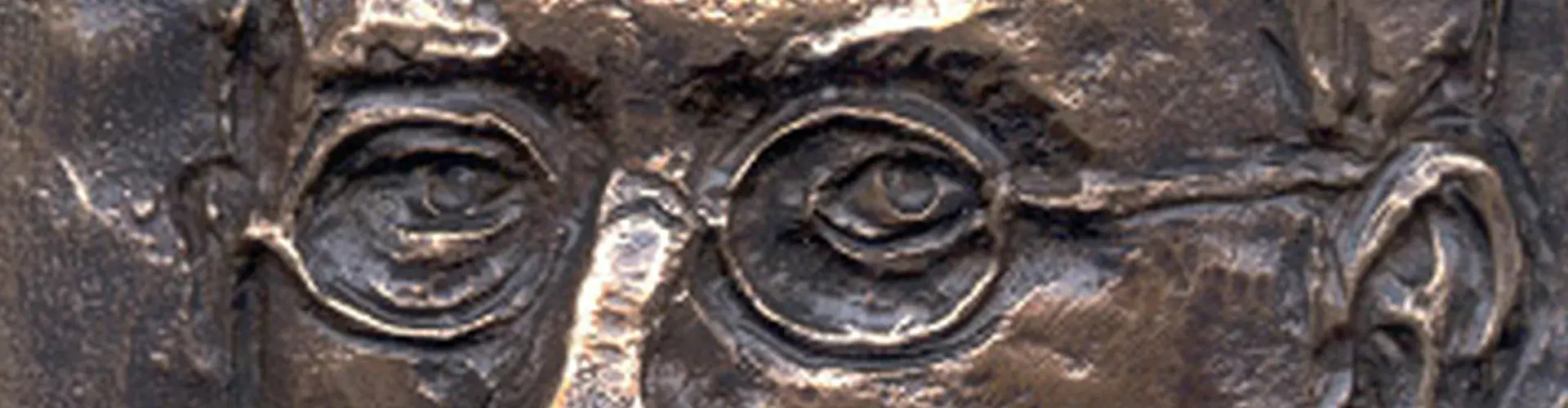

Anastasios A. Tsonis

The 2026 Lewis Fry Richardson Medal is awarded to Anastasios A. Tsonis for outstanding contributions applying methods of nonlinear data analysis to atmospheric science and the theory of complex networks to coupled subsystems of the climate system.
Anastasios Tsonis has been one of the key researchers in nonlinear geosciences for several decades. His work spans a wide range of topics in atmospheric and climate dynamics. It uses state of the art methods from nonlinear dynamics, chaos theory, statistics and complexity science in close synergy with experimental data. He was one of the first researchers who advocated the use of nonlinear state space reconstruction methods and nonlinear data analysis in the geosciences, in particular in atmospheric science. Based on a subtle combination of advanced statistical methods and methods from dynamical systems theory, he showed how to distinguish between records generated by deterministic chaos and by random processes.
As another important contribution Anastasios Tsonis has pioneered a new approach to atmospheric and climate dynamics based on the identification and analysis of underlying networks. In this representation the network nodes are resolution-dependent grid points and the existence or not of links between them is determined by the presence of correlations between the time series of observables (anomalies) associated to each node. The conditions under which partial or complete synchronization can occur in the network provides then valuable insights into the dynamics of climate phenomena. Furthermore, he developed new promising ways for predictability of El Nino events and to identify teleconnections. This way he also identified dynamic interrelations among basic large-scale structures in the atmosphere and even could show significant climate shifts. Based on his idea to view the climate system as a complex network of connected subsystems, he was one of the first to apply the concept of ‘small-world networks’ to atmospheric science.
The work of Anastasios Tsonis has influenced generations of researchers in climate science, particularly atmospheric science, not only by his well-known books promoting nonlinear dynamics and chaos in the geosciences but also by organising many international conferences and summer schools for students. Tsonis has published more than 100 papers in peer reviewed scientific journals, always serving two communities, the communities of physicists (Physics Review Letters) and of geoscientists (Geophysics Research Letters). He is an active member of the geoscience community and has organised several sessions on nonlinear dynamics in atmospheric science at EGU and AGU meetings, including sessions devoted to network approaches in climate science.