
Another clue in an extinction mystery: Why one ancient ocean creature survived while another vanished
5 May 2026
Vienna - Some of the most beautiful creatures to grace the ancient seas, the ammonites, disappeared in the end-Cretaceous mass extinction that finished off the dinosaurs 65.5 million years ago.
“It’s a tragic story, because this incredibly diverse group made it through multiple mass extinctions, including the most dramatic mass extinction event in history”
The Permian-Triassic extinction, which killed off 96% of marine species about 252 million years ago, says Michael Schmutzer, an evolutionary biologist at the University of Oxford in England. Something has nagged at Schmutzer and other scientists for decades though: Why did this diverse, successful genus that had lived for 350 million years in many different marine environments die out, when a much less diverse group of shelled cephalopods, the nautiloids, survived the extinction event and survived through today?
Schmutzer and his colleagues took a fresh look at this long-standing evolutionary puzzle and will present their findings at the EGU General Assembly next week. To examine why nautiloids survived and ammonites died out, the team compiled the largest dataset yet assembled for Late Cretaceous shelled cephalopods, including fossils long buried in museum drawers around the world; so-called dark data. Combining various kinds of data published in the literature and amassed in the paleobiology database yielded data on body size, egg size, and geographic distribution.
Previous studies suggested geographic distribution differences were why nautiloids had survived the extinction event, Schmutzer says. Schmutzer's study does not support geographic distribution as an important factor, however. His study does suggest another previous hypothesis, related to egg size, might hold the key, but not in the way previously thought. Ammonites laid vast numbers of tiny eggs, releasing tiny hatchlings into the ocean, with only a few reaching adulthoods. Nautiloids, by contrast, produced fewer, much larger eggs and hatchlings, and likely grew more slowly as they had slower metabolic rates. The hypothesis was that
“having large, yolk‑rich eggs allowed nautilus embryos to develop longer and hatch at a larger size, which might have given them an edge when marine ecosystems collapsed and food was scarce,” Schmutzer says.
However, Schmutzer’s results point in a different direction: The few ammonoid genera that hung on for a short time after the extinction event were those with the smallest eggs. This suggests that the egg hypothesis is on to something, but needs to be revised, he says. Ammonites and nautiloids may have depended on very different strategies to survive in the chaotic aftermath of the end-Cretaceous asteroid impact, when darkness, collapsing food webs, and environmental instability reshaped life on Earth. Maybe ammonites were just unlucky, Schmutzer says.
Text written by Megan Sever.
Note to the media:
When reporting on this story, please mention the EGU General Assembly 2026, which is taking place from 03– 08 May 2026. This poster will be presented in Session SSP1.1 on Tuesday 05 May, 16:15–18:00 CEST in Hall Hall X3, X3.33. Schmutzer will be on site and available for interviews.
If reporting online, please include a link to the abstract: https://meetingorganizer.copernicus.org/EGU26/EGU26-5239.html
Press contact:
Asmae Ourkiya
EGU Media and Engagement Manager
media@egu.eu
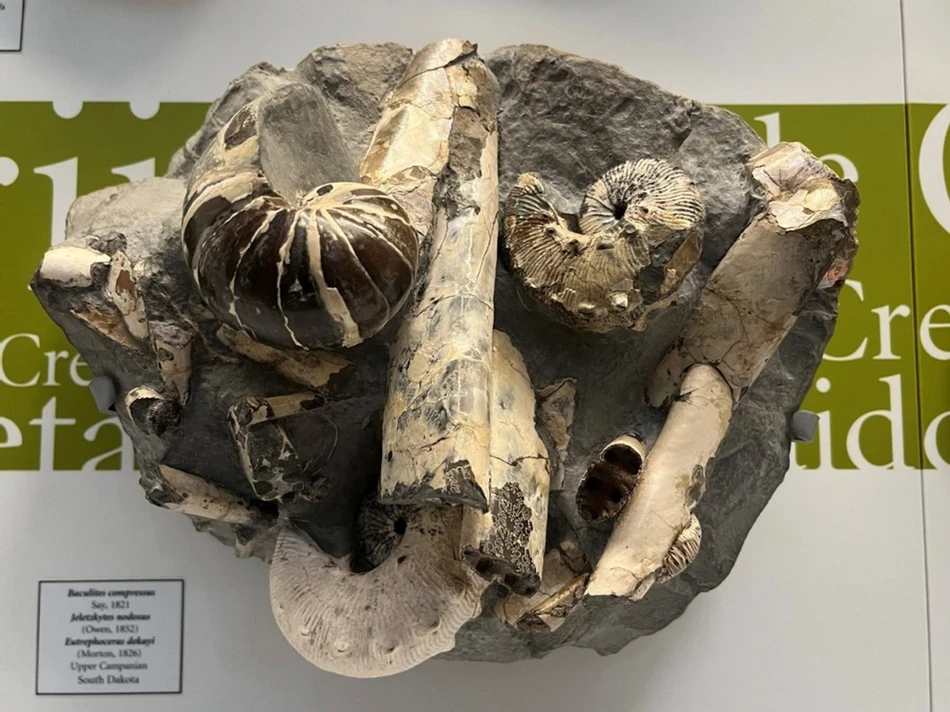
Art: Ammonite_Nautiloid or Ammonite_Nautiloid2
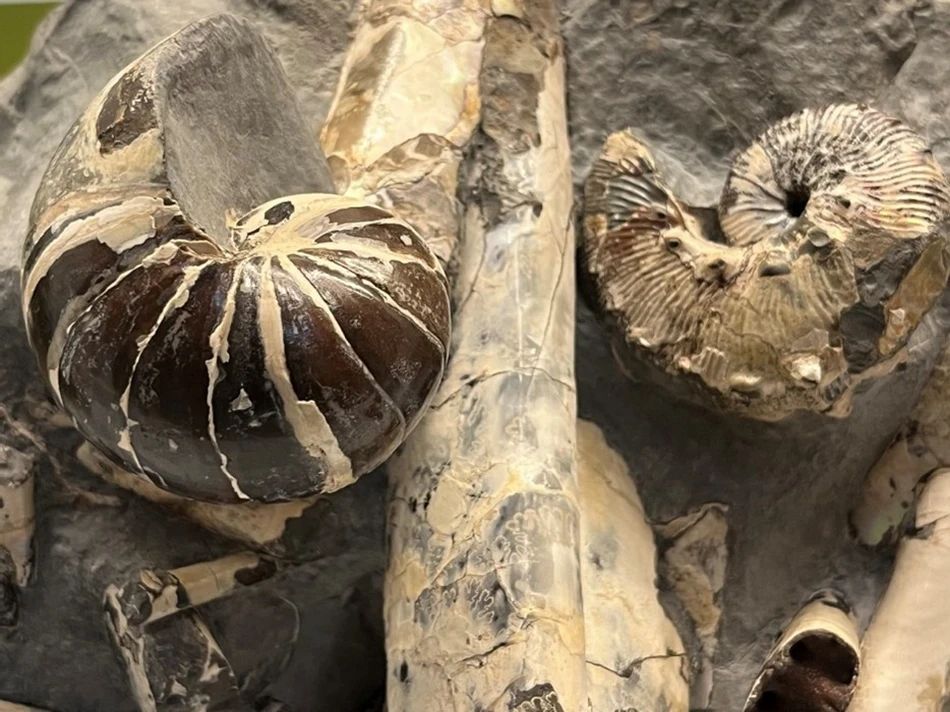
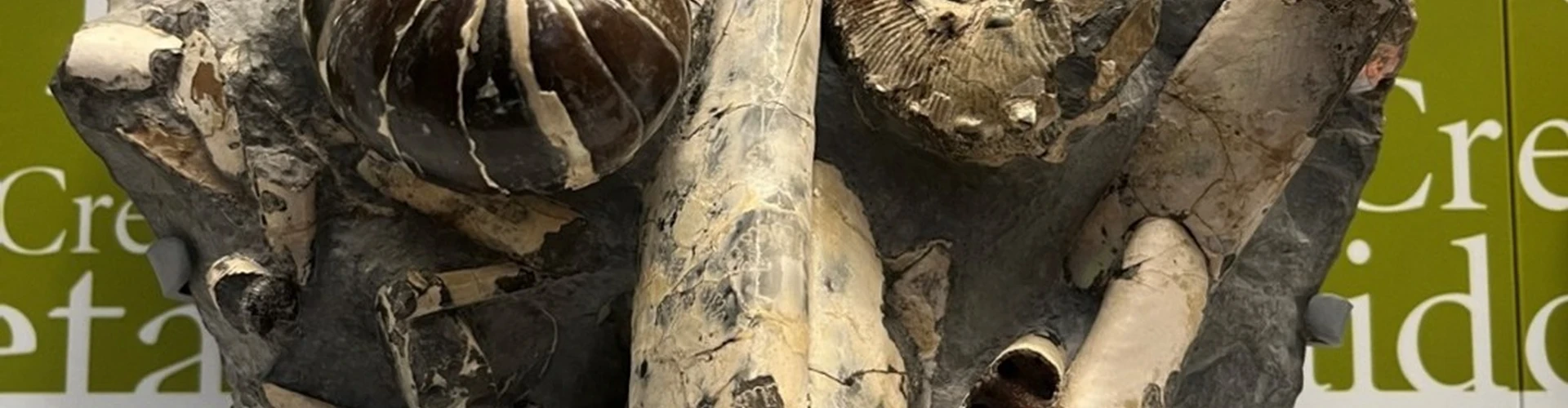
A Late Cretaceous-aged nautiloid (left) and ammonite (right curled and right and bottom straight fossils) found in South Dakota show that at least some species lived in the same location. Credit: Michael Schmutzer