
Saudi Arabia’s water problem has a surprising solution: its own wastewater
5 May 2026
Vienna, Austria - More than two-thirds of Saudi Arabia’s irrigation water and a third of the country’s drinking water comes from groundwater, yet aquifers are being depleted faster than they recharge. At the same time, sewage treatment generates large volumes of treated wastewater: 1.6 billion cubic meters of treated wastewater is underutilized throughout the country each year, says Mohammed Benaafi, a research scientist at King Fahd University of Petroleum and Minerals. That wastewater is equivalent to about 60% of Saudi Arabia’s annual urban drinking water demand, he says. This overlooked water resource could help stabilize water supplies in one of the world’s most water-stressed regions. “It is a strategic asset that could be utilized for aquifer recharge.”
Using laboratory experiments, Benaafi and his colleagues tested whether treated wastewater can safely recharge coastal aquifers under realistic managed aquifer recharge conditions. They compared treatment levels and recharge rates to assess impacts on flow and water quality.
The results show a clear tradeoff: Higher recharge rates, especially with lower-quality treated wastewater, accelerate clogging and reduce aquifer performance. By contrast, higher-quality treated wastewater injected at lower recharge rates maintains flow and minimizes impacts on groundwater quality.
The findings suggest that with optimized treatment and recharge strategies, wastewater reuse could reduce groundwater withdrawals in eastern Saudi Arabia by almost a third, easing pressure on depleted aquifers while putting surplus water to use.
The findings highlight a broader opportunity for water-scarce regions to treat wastewater not as waste, but as a critical resource for long-term water security. Using treated wastewater in managed aquifer recharge “provides a sustainable solution to reduce the stress on nonrenewable groundwater and mitigate aquifer depletion in arid regions,” Benaafi says.
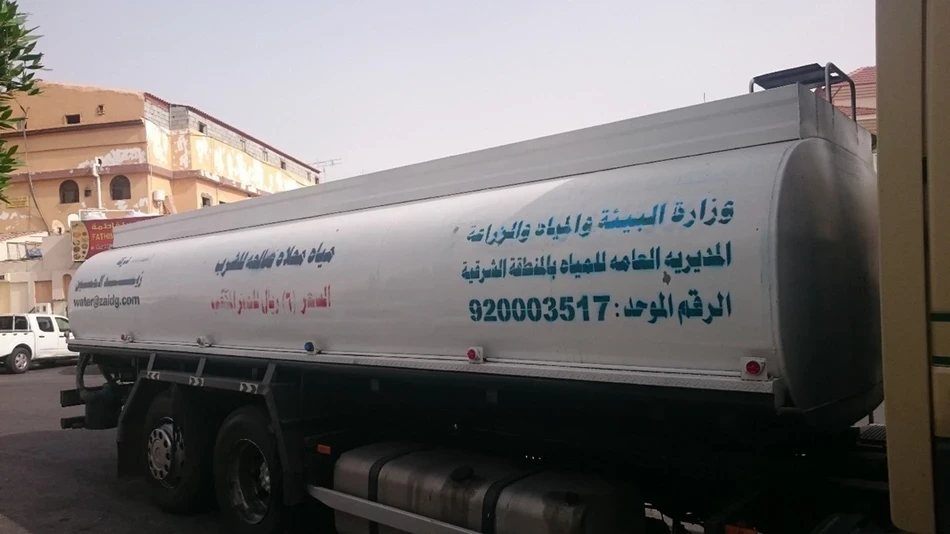
Water tank in Saudi Arabia. Wastewater could service about 60% of Saudi Arabia’s annual urban drinking water demand. Credit: Ashashyou, CC BY-SA 3.0Art: https://commons.wikimedia.org/wiki/File:Water_tank_in_Saudi_Arabia_2.jpg

More information
Text written by Megan Sever.
Note to the media:
When reporting on this story, please mention the EGU General Assembly 2026, which is taking place from 03– 08 May 2026. This poster will be presented in Session HS8.1.3 on Tuesday 05 May 14:00-15:45 CEST in Hall A, A.117. Benaafi is available for interviews.
If reporting online, please include a link to the abstract: https://meetingorganizer.copernicus.org/EGU26/EGU26-12097.html