


EGU logo

European Geosciences Union

www.egu.eu

EGU

News

EGU autumn elections 2026: call for candidates now open!
  • 31 July 2026

The 2026 autumn elections for the next EGU Treasurer and Early Career Scientist (ECS) Union Representative will take place from 2 to 24 November 2026. EGU would like to invite you to propose a candidate to either of these vacancies by 8 September. All our members are welcome to propose a candidate, and you can even nominate yourself!


EGU26 – by the numbers
  • 11 May 2026

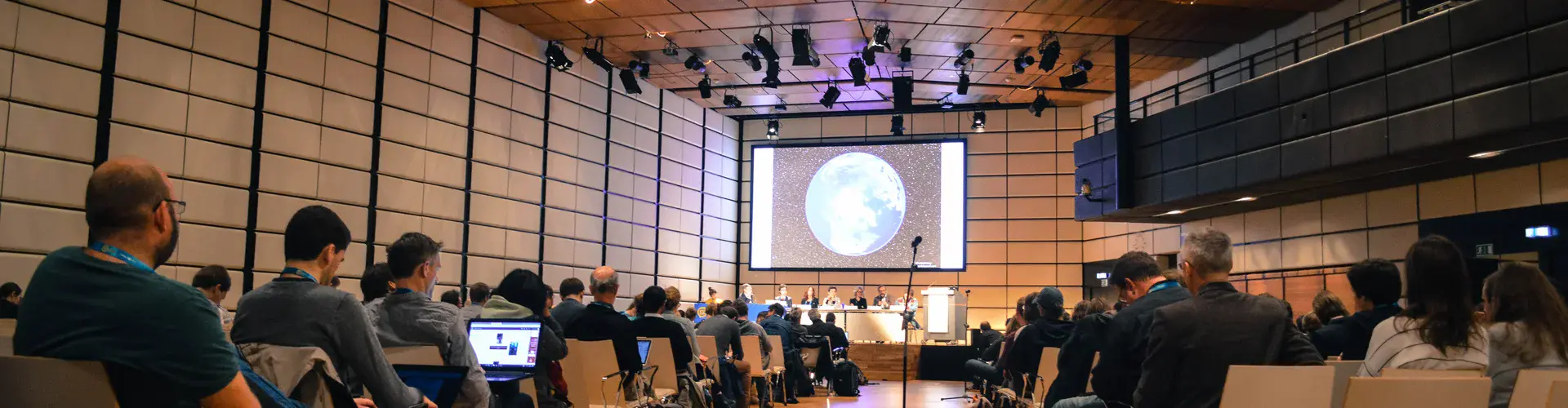
Thanks to the enthusiastic efforts of our members and volunteers, EGU26 was another record breaking year with an amazing 22,497 people participating in the General Assembly, both in Vienna and online!


Latest posts from EGU blogs

GeoRoundup: the highlights of EGU Journals published during July!

Each month we feature specific Divisions of EGU and during the monthly GeoRoundup we put the journals that publish science from those Divisions at the top of the Highlights section. For July, we are featuring the Planetary and Solar System Sciences (PS), Seismology (SM), and Tectonics and Structural Geology (TS). They are represented by the journals Solid Earth (SE), Geoscientific Model Development (GMD),and Annales Geophysicae (ANGEO). Geoscientific Model Development A global high-resolution hydrological model to simulate the dynamics of surface …


Tidal pulse of rivers

The research gap Ocean tides play a significant role on ocean circulation, coastal processes and mass variations. Tides are generated from the gravitational interaction between Earth, Moon and Sun, which typically results in two high and two low tides observed each day. Satellite observations have vastly expanded our understanding of ocean tides. In 2022, the Surface Water and Ocean Topography (SWOT) satellite was launched, funded by CNES and NASA, and provided a new perspective on the ocean surface and inland …


More Than a Rain Gauge: When Salt Starts Steering the Sea

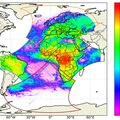
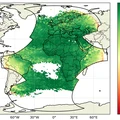
Posted in: Ocean Sciences | Reviews & Perspectives | Ocean Science Jubilee Special Issue We usually think of ocean salinity as the ocean’s rain gauge. Rain, rivers, and melting ice freshen the surface; evaporation leaves it saltier. Seen from space, these changing patterns reveal how Earth’s water cycle is evolving, with wet regions generally becoming fresher and dry regions saltier as the climate warms. That familiar climate fingerprint has become increasingly clear. More than fifteen years of satellite observations, together …